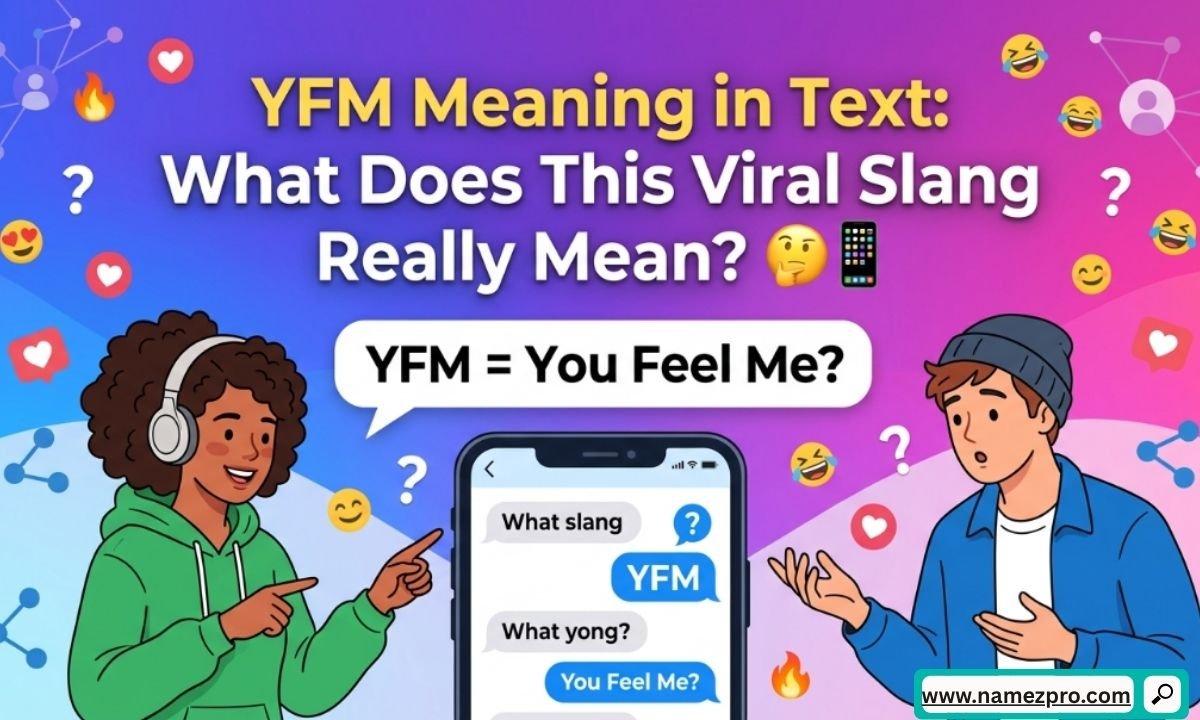
You got a text that ended with “YFM?” and your first reaction was to stare at your screen. No context. No clue. Just three letters sitting there waiting for a reply. That moment of confusion happens to thousands of people every day, and it’s exactly why YFM meaning in text gets searched so often. This isn’t some rare abbreviation buried deep in internet culture. It’s everywhere. You’ll find it in a friend’s vent text, a gamer’s post-match message, a TikTok caption, a Bumble bio, and a Twitter thread all in the same afternoon. If you don’t know what it means, you’re already a step behind in the conversation.
Here’s what makes YFM worth understanding beyond its definition. This three-letter slang acronym carries real emotional weight. It’s not filler. It’s not random text lingo. And it’s a direct line into how a generation communicates feeling, connection, and shared experience through online slang. Rooted in African American Vernacular English and pushed into the mainstream by hip-hop culture, YFM made the leap from street speech to instant messaging to every major digital platform you use today. This guide breaks down the full picture: what it means, where it came from, who uses it, how to reply, and when to keep it out of your messages entirely.
Into slang and creative names? Check out our free Name Generator at NamezPro.com and find a username that actually hits.
Get instant name ideas no signup needed
What Does YFM Mean in Text? Every Possible Interpretation Explained
YFM stands for “You Feel Me?” It’s a question and a statement rolled into one. When someone texts you “YFM?”, they’re asking if you understand them, agree with them, or share their feeling about something.
Think of it as a shorthand version of “Do you get me?” or “Are you with me?”
Here are the key points about YFM meaning in text:
- YFM = “You Feel Me?”
- It seeks mutual understanding, agreement, or emotional connection
- It works in friendly chats, online communities, and casual speech
- Teens and young adults use it most in digital communication
But here’s the kicker. YFM doesn’t always mean “You Feel Me?” In specific communities, it takes on other meanings entirely.
| Meaning | Community | Example Use |
|---|---|---|
| You Feel Me? | General texting, social media | “That game was rough, YFM?” |
| Your Favorite Music | Radio and DJ communities | “Tune into YFM tonight” |
| Your Favorite Martian | YouTube culture | “Watching YFM throwbacks” |
Context inside the conversation tells you which meaning applies right away.
Pro-Tip: When you see YFM in a personal text or group chat, it almost always means “You Feel Me?” The other definitions live in very specific niche communities online. If the conversation is personal and emotional, go with the primary meaning every time.
Read Also: BTA Meaning in Text: Definition, Examples and When to Use It
The Origin of YFM Meaning in Text: From Street Speech to Your Screen
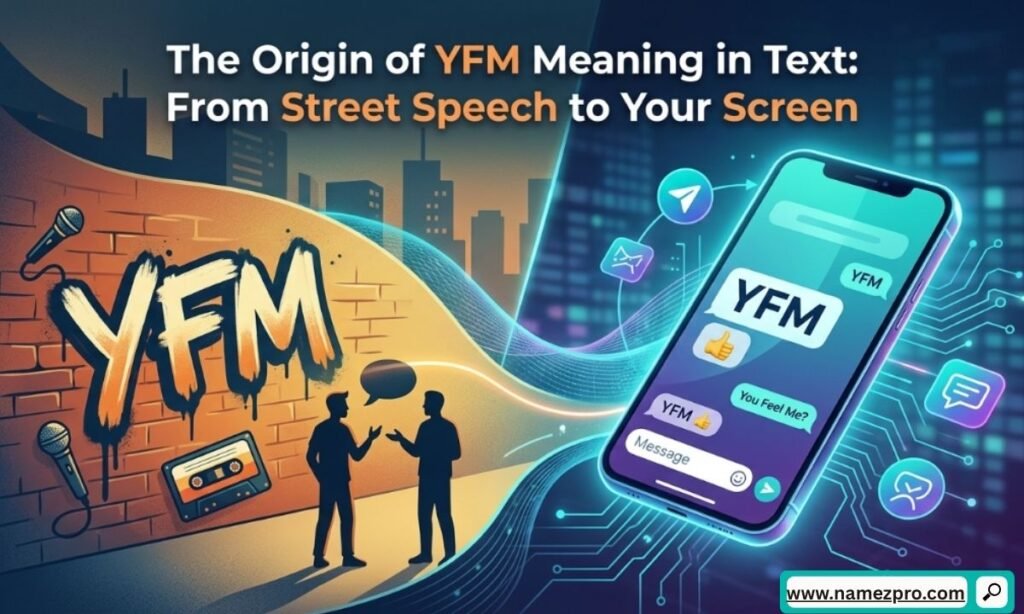
The story behind YFM meaning in text starts long before smartphones existed. The phrase “You Feel Me?” comes from African American Vernacular English (AAVE), where it served as a way to check in emotionally during conversation. It asked: “Do you understand where I’m coming from?”
By the 1990s, hip-hop culture pulled it into the mainstream. Music artists used it in lyrics and interviews constantly. It became part of street culture and vernacular speech connecting communities across America.
Then texting happened. As instant messaging and SMS exploded in the early 2000s, people started shortening everything. “You Feel Me?” became YFM, a compact piece of text lingo carrying the full emotional weight of the original phrase.
The timeline looks like this:
- Pre-2000s: “You Feel Me?” lives in spoken AAVE and everyday casual speech
- 1990s: Hip-hop artists push it into mainstream pop culture
- Early 2000s: AIM and SMS compress it into the slang acronym YFM
- 2010s onward: Digital platforms like Twitter, Instagram, and Discord spread it globally
Pro Tip: YFM is a clear example of how AAVE roots feed mainstream digital communication. Understanding this history makes you a more thoughtful user of the term, not just a more informed one. Borrowed slang carries cultural weight. Use it accordingly.
Read Also: MIA Meaning in Text: Real Examples, Memes & Social Media Uses
How to Use YFM in a Text Conversation (Real Examples Included)
Knowing the definition is one thing. Using it correctly is another. YFM fits into conversations where you want someone to relate to your point, share your frustration, or vibe with what you’re saying.
Your tone before YFM tells the other person exactly how to respond. Here are three common usage patterns:
1. Seeking Agreement:
- Friend 1: “That exam wiped me out, YFM?”
- Friend 2: “Totally. I barely finished the last section.”
2. Expressing Shared Frustration:
- Friend 1: “Three meetings before noon is brutal, YFM?”
- Friend 2: “Yeah, I need coffee before I exist.”
3. Building Casual Rapport:
- Friend 1: “This spot has the best tacos, YFM?”
- Friend 2: “100%. I come here every Friday.”
Here’s where YFM works best:
- Use it in informal exchanges, not formal settings
- It thrives in relaxed environments with close contacts
- It turns a one-sided statement into a real two-way exchange
- It’s a natural fit for light exchanges on digital platforms
Pro-Tip: Drop YFM at the end of a statement to invite the other person in without sounding pushy. It transforms a one-way vent into a real back-and-forth. The best conversational glue never feels forced.
Read Also: TF Meaning in Text: Everything You Need to Know in 2026 😳💬
How to Reply When Someone Uses YFM in a Text
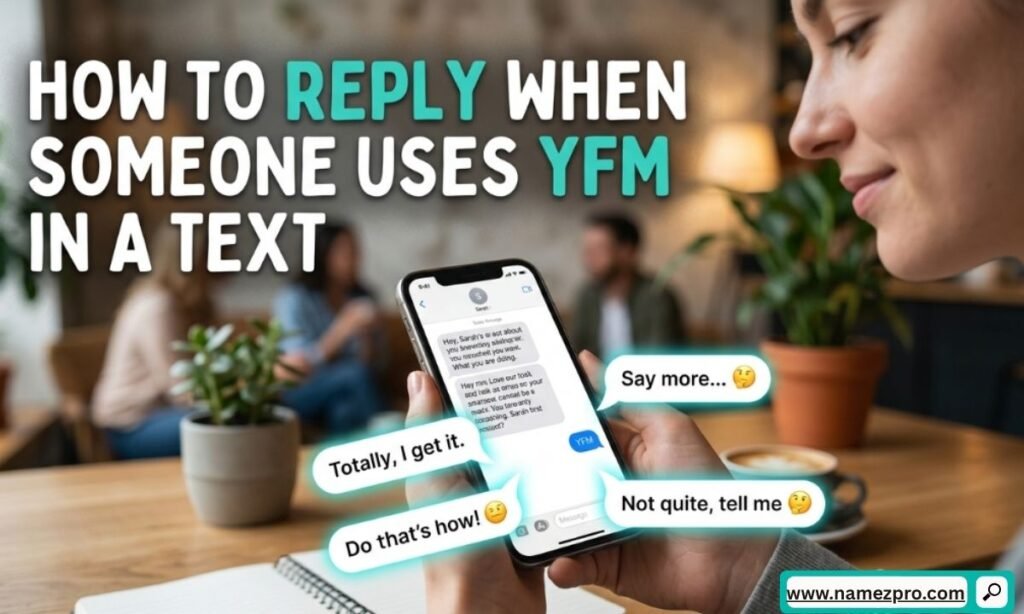
Getting a YFM text puts the ball in your court. Your reply shapes the whole tone of the conversation. The good news? Responding is simple once you know the emotional intent behind the message.
Your response depends on context and tone. Here are the most natural options:
- When you fully agree:
- “Totally!”
- “For sure, I feel you.”
- “100%, no doubt.”
2. When you partially agree:
- “Kind of, but I see it differently.”
- “Sort of. What makes you feel this way?”
3. When you need more context:
- “Wait, break it down for me.”
- “I’m with you, but give me more.”
Here’s a quick reply guide based on tone:
| Situation | Best Reply | Tone It Sends |
|---|---|---|
| Full agreement | “Totally, I feel the same.” | Warm and connected |
| Partial agreement | “Sort of, tell me more.” | Open and curious |
| Confusion | “I hear you. What do you mean?” | Engaged but honest |
| Playful mood | “Oh, I feel that deep.” | Fun and relatable |
Pro Tip: Your reply to YFM signals emotional connection. A flat “ok” reads as cold. A warm “I feel you” builds real rapport and keeps the conversation alive. The phrase invites you in. Meet it with the same energy it brings.
Where Does YFM Show Up Online? TikTok, Snapchat, Discord, and Dating Apps

YFM meaning in text doesn’t stay in private conversations. It lives across online communities and digital platforms in slightly different forms depending on the space.
Here’s how each platform uses it:
TikTok and Instagram: Creators end captions and comments with YFM to make content personal and relatable. “This week drained me completely, YFM?” pulls viewers into a shared emotional moment and drives comment engagement.
Discord and Gaming Chats: In gaming lobbies and online communities, YFM works as fast conversational glue during intense moments. “That final boss took everything I had, YFM?” gets instant responses from teammates in gaming chats. It builds quick gamer bonding without slowing down the chat.
Dating Apps: On Hinge or Bumble, YFM appears in bios and opening messages. “Looking for late-night conversations, YFM?” signals a laid-back, emotionally open personality right from the start.
| Platform | How YFM Gets Used | Effect |
|---|---|---|
| TikTok/Instagram | Captions and comments | Builds relatability |
| Discord | Group and DM chats | Creates gamer bonding |
| Dating Apps | Bios and openers | Shows casual personality |
| Reaction posts | Adds conversational energy |
Pro-Tip: On dating apps, YFM in your bio works when you back it up with real substance. Without it, it reads as low-effort filler. A bio isn’t a vibe check. It’s your first impression.
Read Also: Lumon Meaning Explained: Origins & Secrets Finally Revealed
Does YFM Meaning in Text Change Around the World?
YFM meaning in text varies by geography more than most people expect. The slang travels through evolving slang culture at the speed of a viral post. But its emotional weight doesn’t land the same everywhere.
In the United States: American hip-hop culture, social media, and gaming communities pushed YFM into everyday digital communication. It’s widely understood across age groups and regions here.
In the UK, Canada, and Australia: People recognize it through American music and online content. But it isn’t embedded in local speech the same way. Locals often swap it for “You know what I mean?” or “Get me?”
In non-English-speaking countries: YFM rarely appears in local chats. The phrase “You Feel Me?” doesn’t translate directly into other languages. The emotional connection it carries gets lost without cultural context to anchor it.
Here’s the global snapshot:
| Region | Familiarity | Local Alternative |
|---|---|---|
| United States | Very High | Standard use |
| United Kingdom | Moderate | “Get me?” |
| Canada/Australia | Moderate | “Right?” |
| Non-English Countries | Low | Varies by language |
Pro Tip: Slang tied to AAVE roots travels through media and music, not direct translation. YFM is globally recognized in youth culture, but its emotional depth doesn’t always cross language barriers intact.
While you’re leveling up your text game, why not find a name that matches your vibe? Our free Name Generator has you covered.
Get instant name ideas no signup needed
Is YFM Safe to Use? Offensive Meanings, Risks, and Red Flags
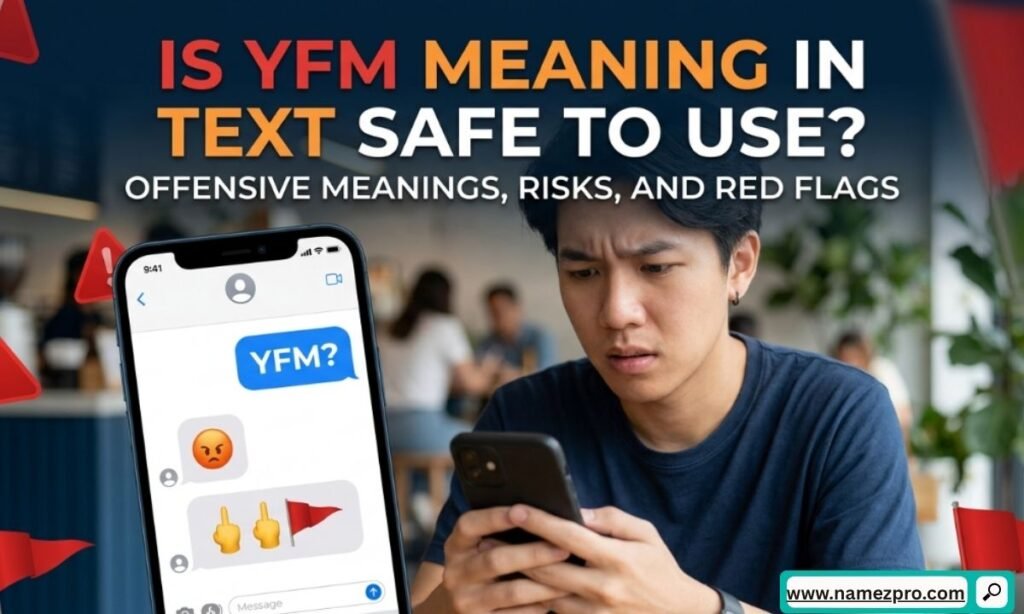
Good news first. YFM doesn’t carry any hidden offensive meaning. It’s a genuine expression of emotional connection and mutual understanding. No coded insult. No hidden layer.
But context matters a lot. Here are situations where YFM lands the wrong way:
- During serious emotional conversations where slang feels dismissive
- When texting someone unfamiliar with online slang
- In arguments where “YFM?” sounds like you’re minimizing the other person’s feelings
- When the topic is sensitive and casual speech feels disrespectful
The cultural angle matters too. Since YFM comes from African American Vernacular English, using it with awareness of its cultural origins shows real respect. Don’t use it simply because it sounds cool. Use it because you understand what it means and where it comes from.
Pro-Tip: YFM isn’t offensive by nature. But it stings in the wrong moment. Read the emotional temperature of your conversation before you hit send. Slang borrowed from ethnic dialect deserves that level of care.
Read Also: OMS Meaning in Text: What Does This Viral Slang Mean?
YFM at Work or School: Where This Slang Simply Doesn’t Belong
Let’s be direct. YFM has no place in formal emails, work chats, or academic communication. Using it in those spaces reads as careless, not casual. It signals you didn’t consider your audience at all.
Consider sending this to your manager: “This project is running behind, YFM?” It doesn’t read as relatable. It reads as an unprofessional tone that undermines your credibility.
Here are cleaner alternatives for professional settings:
| Instead of YFM, Say… | Where to Use It |
|---|---|
| “Do you agree?” | Work emails and meetings |
| “Does this make sense?” | Academic or formal writing |
| “Are you following?” | Teaching or training sessions |
| “Would you say the same?” | Professional discussions |
There’s one narrow exception. In tight-knit teams with casual internal cultures, a light “YFM?” in a meme channel or Friday Slack thread fits fine. But it never belongs in client-facing messages or serious discussions where your tone carries real stakes.
Pro Tip: The rule is clear. If you’d reread a message before sending it to a boss or professor, leave YFM out of it entirely. Keep your professional communication polished. Slang belongs after the workday ends.
Read Also: TTM Meaning in Text: What Does TTM Mean in Chats, Snapchat & TikTok?
Who Actually Uses YFM? The Real Demographics Behind This Slang
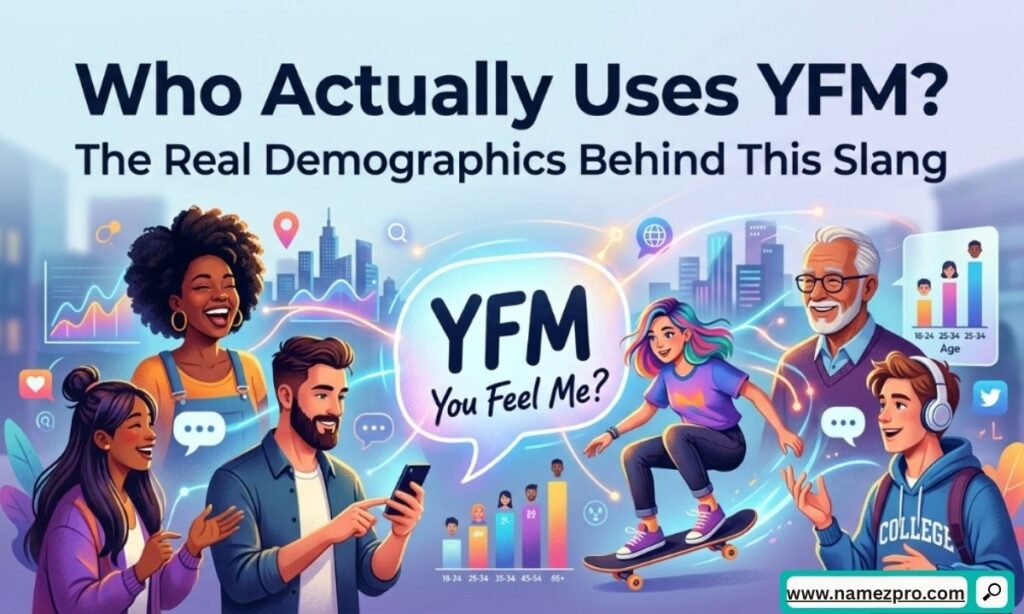
Not everyone uses YFM meaning in text the same way. The slang sits at an interesting crossroads between generations, cultures, and communities. Knowing your audience helps you use it with the right people at the right time.
Gen Z (born 1997-2012): This group leads YFM usage right now. They grew up with digital communication and trendy slang as a first language. For them, YFM flows naturally in texts, comment sections, and Discord servers.
Millennials (born 1981-1996): Many Millennials remember the phrase from AIM chats and early text messaging culture. They use it less frequently now but recognize it instantly when they see it.
Hip-Hop and Music Communities: These communities kept YFM alive for decades. Fans of hip-hop culture carry the phrase forward through every new platform and generation, rooted in its AAVE origins.
Gaming Communities: Gamer bonding over shared wins and losses made YFM a natural fit in gaming lobbies and group chats across platforms.
| Group | Usage Frequency | Primary Platform |
|---|---|---|
| Gen Z | High | TikTok, Discord, texts |
| Millennials | Moderate | Instagram, texts |
| Hip-Hop Fans | High | Twitter, Instagram |
| Gamers | High | Discord, gaming chats |
Pro Tip: YFM meaning in text feels authentic because it grew from real communities, not corporate trends. This is why it holds staying power when most trendy slang fades within months of going viral.
YFM Meaning in Text vs. 7 Other Slang Terms: Which to Use?
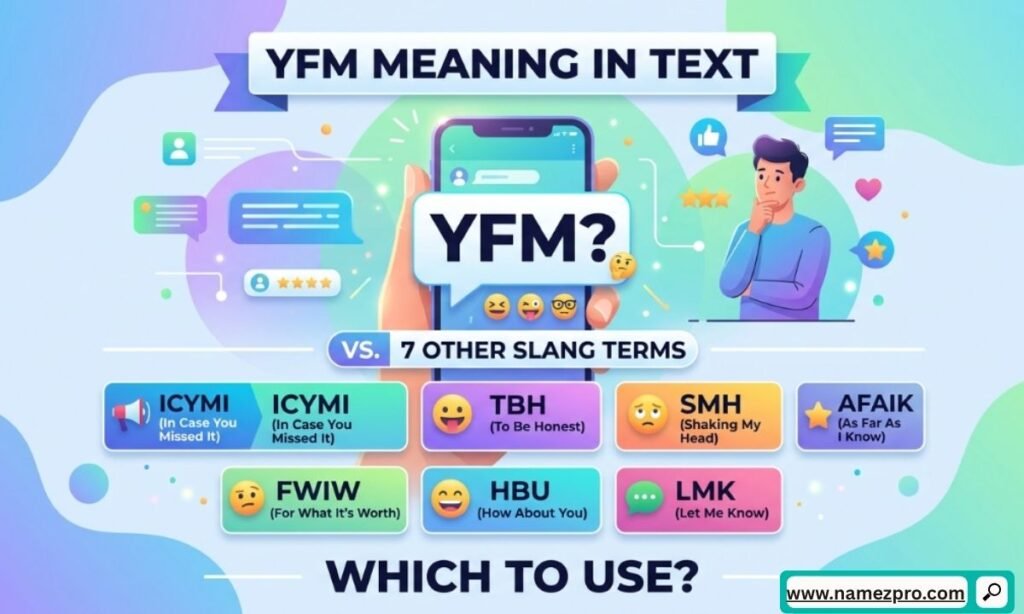
There’s a whole family of texting acronyms doing similar jobs to YFM. But each one hits differently. The key difference is emotional direction.
YFM reaches outward. You’re asking someone to meet you where you are emotionally. Other terms respond or reflect inward. Here’s the full breakdown:
| Term | Full Form | Emotional Function | Best Used When |
|---|---|---|---|
| YFM | You Feel Me? | Seeks empathy and agreement | Sharing feelings or personal views |
| FR | For Real | Emphasizes truth | Reacting to something surprising |
| IKR | I Know, Right? | Validates someone’s point | Agreeing enthusiastically |
| NGL | Not Gonna Lie | Signals honest vulnerability | Sharing a raw or personal take |
| TBH | To Be Honest | Sets up direct feedback | Giving genuine opinions |
| IYKYK | If You Know You Know | Creates exclusivity | Inside jokes or niche references |
| SMH | Shaking My Head | Expresses disbelief | Reacting to bad decisions |
Choosing the right term is easier once you know the emotional job each one does:
- Use YFM to invite emotional connection and seek empathy agreement
- Use FR or IKR to validate someone else’s point
- Use NGL or TBH to share something honest from your own perspective
- Use IYKYK for inside humor with a specific group
- Use SMH when something genuinely disappoints or surprises you
Pro-Tip: The emotional direction is everything. YFM invites someone in. IKR meets someone where they already are. They sound similar but serve completely different conversational purposes.
Read Also: WYO Meaning in Text: How to Use It Like a Native Speaker in 2026
5 Mistakes People Make With YFM in Texting (And Better Alternatives)
Knowing YFM meaning in text is step one. Avoiding these common errors is step two.
Here are the five mistakes people make most often with this slang acronym:
Mistake 1: Using YFM in professional messages. It signals you didn’t consider your audience. Use “Do you agree?” instead.
Mistake 2: Sending YFM to someone much older. They won’t recognize it and it reads as dismissive or rude. Use “You know what I mean?” instead.
Mistake 3: Using it mid-argument. During a heated exchange, “YFM?” sounds like you’re not taking the situation seriously. Use “Does this make sense to you?” instead.
Mistake 4: Overusing YFM in every message. When every text ends with YFM, it stops carrying any weight. Use it sparingly so it keeps its impact in digital texts.
Mistake 5: Sending YFM with no real point behind it. YFM needs a statement to anchor it. Without context, it reads as lazy digital lingo with no purpose behind it.
Pro Tip: Every slang acronym has a usage ceiling. Overusing YFM turns a genuine emotional connection signal into background noise. One well-placed YFM hits far better than five in a single conversation.
FAQs About YFM Meaning in Text
YFM stands for “You Feel Me?” It’s a casual way to ask if someone understands, agrees with, or relates to what you’re saying in text messaging.
Close, but not identical. “Do you understand me?” focuses on comprehension. YFM focuses on emotional connection and shared experience. The difference is emotional, not just grammatical.
It comes from African American Vernacular English (AAVE) and was popularized by hip-hop culture in the 1990s before moving into digital communication in the early 2000s.
It depends on the platform. On social media, it works fine. In a first text with a stranger, it reads as overly casual and informal.
Respond with warmth and agreement. “Totally,” “I feel you,” or “100%” all work well and match the natural tone of the phrase.
Not really. The meaning stays consistent across digital platforms. The tone shifts slightly by community, but YFM always signals a search for mutual understanding.
Yes. It’s safe, informal internet slang with no offensive meaning. Keep it out of school assignments and formal settings where tone matters.
Yes. In radio and DJ circles, YFM stands for Your Favorite Music. In YouTube culture, it once referred to Your Favorite Martian. But in everyday texting, it almost always means “You Feel Me?”
Final Thoughts
YFM meaning in text is simple at its core. YFM stands for “You Feel Me?” and it’s a three-letter shorthand for emotional connection, shared understanding, and everyday relatability. Rooted in AAVE and carried forward by hip-hop culture, it moved from spoken conversation into your text messages, Instagram posts, Discord servers, and dating apps over the last two decades.
Use it in casual conversations with friends, in gaming chats after a tough match, or in a caption needing a human touch. Keep it out of formal emails, work chats, and serious discussions where professional tone carries real weight.
Now you know exactly what it means, where it came from, and how to use it right. The next time someone texts you “YFM?”, you’ll know exactly what to say back.
Now that you’re fluent in YFM, make sure your username speaks the same language. Try our free Name Generator and find one that’s all you.
Get instant name ideas no signup needed