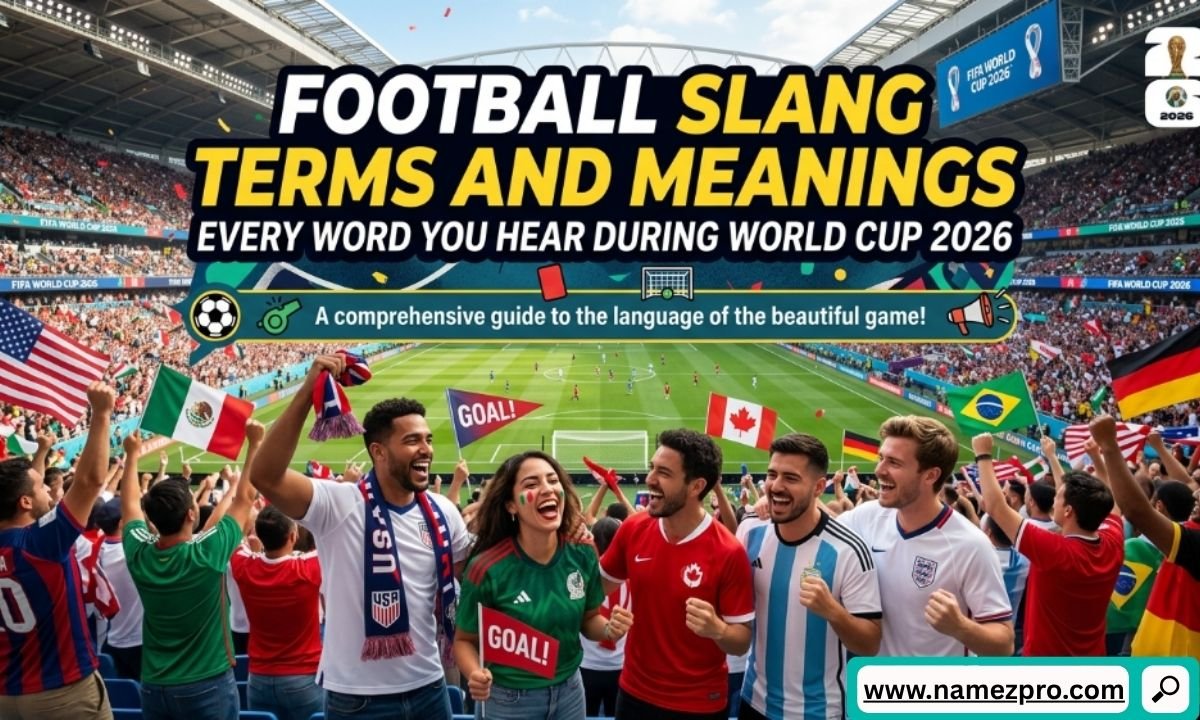
My roommate sat down to watch the World Cup opener with me last week. He’s a die-hard NFL fan. Ten minutes in, a commentator screamed “nutmeg” after a slick piece of skill, and my roommate turned to me completely deadpan and said, “Did someone bring snacks?” I lost it. He wasn’t wrong to be confused. Football has its own language, and if nobody breaks it down for you, the broadcast sounds like a foreign country. Football slang terms meaning is what millions of new and casual fans across the US are Googling right now, especially with 48 nations competing across American, Canadian, and Mexican stadiums through July 19. This guide covers every term you’ll hear, organized by category, so you follow every match without missing a beat.
What Are Football Slang Terms? Meaning and Origin
Football slang terms are informal words and phrases used by fans, commentators, players, and analysts to describe moments, tactics, and situations during a match. They didn’t come from any rulebook. They came from decades of passionate fans inventing colorful language to describe what they saw on the pitch.
Some football slang terms meaning traces back to British pub culture. Others grew out of Brazilian street football, Spanish tactical analysis, and the global FIFA video game community. The result is a living vocabulary shared across cultures and languages that keeps growing with every tournament.
Fun Fact: The word “soccer” itself started as British slang. It’s a shortened version of “Association Football,” the formal name for the sport. British students in the 1880s shortened “Association” to “soccer” as casual shorthand. The word traveled to America and stayed there while Britain moved on to calling it football.
The World Cup accelerates slang spread faster than any other event in sports. A phrase born in a British stadium reaches American living rooms within hours of a viral moment. Football slang terms meaning shifts and expands with every passing match.
Related Post: The Hidden Meanings Behind Every FIFA World Cup 2026 Team Nickname
Football Slang Terms Meaning: On-Pitch Words Every Fan Needs
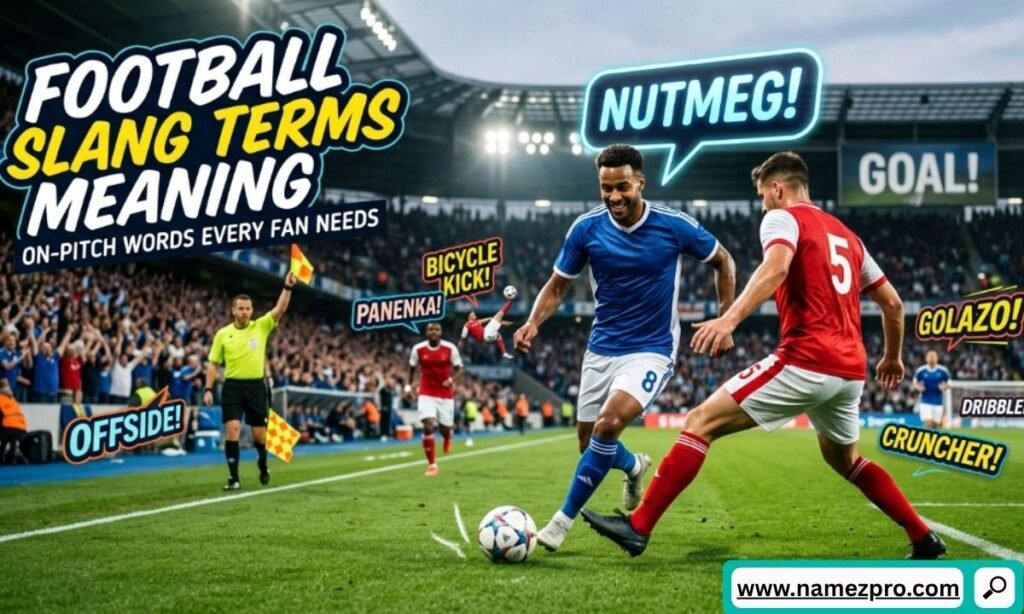
These are the football slang terms you’ll hear most during live World Cup 2026 coverage. Commentators drop them constantly without stopping to explain, and first-time viewers are left guessing.
Here’s a clean breakdown of the most common ones:
| Football Slang Term | Meaning |
|---|---|
| Clean Sheet | A game where the goalkeeper lets in zero goals. A shutout. |
| Brace | When one player scores two goals in the same match. |
| Hat-Trick | Three goals scored by one player in a single game. |
| Nutmeg | Passing the ball through an opponent’s legs. |
| Worldie | A spectacular, jaw-dropping goal. Usually long-range or brilliantly placed. |
| Sitter | An easy scoring chance a player misses. Painful to watch every time. |
| Top Bin | The top corner of the goal. The hardest spot for a keeper to reach. |
| Nil | Zero. No goals. A 0-0 result is called “nil-nil.” |
| Draw | A tied match. Neither team wins at full time. |
The one word Americans trip over most is “nutmeg.” No food involved. When a player slides the ball between an opponent’s legs and collects it cleanly on the other side, the commentator screams it. The origin is debated, but most football historians point to British rhyming slang where “nutmegs” referred to legs.
Tactical Football Slang Terms and Their Meaning Explained
This is where football slang terms meaning gets more specific. Tactical language dominates post-match analysis, halftime breakdowns, and studio pundit discussions. These terms describe how teams play, not individual moments.
High Press: A tactic where the team attacks aggressively without the ball, pressuring opponents high up the field to force mistakes early. Germany and Morocco both run this style consistently.
Low Block: The opposite approach. A team sits deep, defends in tight organized lines, and waits for the right moment to counter-attack. Teams facing stronger opponents often set up this way from the first whistle.
Gegenpressing: A German word describing intense pressing triggered immediately after losing possession. Coach Jürgen Klopp brought the term into mainstream English-speaking football. The idea is simple: win the ball back before the opponent resets.
False Nine: A striker who drops deep into midfield rather than staying near the goal. Lionel Messi operated brilliantly as a false nine during his peak Barcelona years. It pulls defenders out of position and creates space for teammates running forward.
Tiki-Taka: Spain’s signature style built on short, quick passing to keep possession and gradually wear opponents down. Spain’s 2010 World Cup win was built entirely on tiki-taka. The name sounds light, but the tactic demands extraordinary technical discipline from every player on the field.
VAR: Video Assistant Referee. An official reviewing live footage who alerts the on-pitch referee to potential errors in key decisions. Goals, red cards, and penalty calls all fall under VAR review. American fans new to football tend to compare it to instant replay in the NFL.
Football Slang Terms Meaning in Fan and Commentator Culture
Some of the most entertaining football slang terms meaning comes not from tactics but from fan culture and broadcast commentary built up over decades.
12th Man: The fans inside the stadium. When crowd noise intimidates opponents or lifts the home side, supporters become an unofficial extra player. American sports fans already know this concept well from NFL culture.
Squeaky Bum Time: A phrase invented by legendary Manchester United manager Sir Alex Ferguson to describe the nerve-wracking final minutes of a tight match. BBC and ESPN analysts now use it completely straight-faced. It describes exactly how those last five minutes feel in your stomach.
Park the Bus: When a team drops every player behind the ball to protect a lead. Zero attacking intent. Pure defensive shape from box to box. Fans of the attacking team use this phrase with obvious frustration from the stands.
Route One: Long, direct balls launched forward rather than building play through passing combinations. Unsophisticated but sometimes devastatingly effective under World Cup pressure when a team chases a late equalizer.
Disaster Class: The opposite of a masterclass performance. An individual or collective showing so poor it earns this label from studio pundits. Nobody wants this phrase attached to their name after a group stage exit.
Related Post: 199+ Dark Humor Fantasy Football Names (Brutal, Twisted & Unforgettable) 2026 Power List 😈🏈
British vs American Football Slang Terms: Meaning and Differences
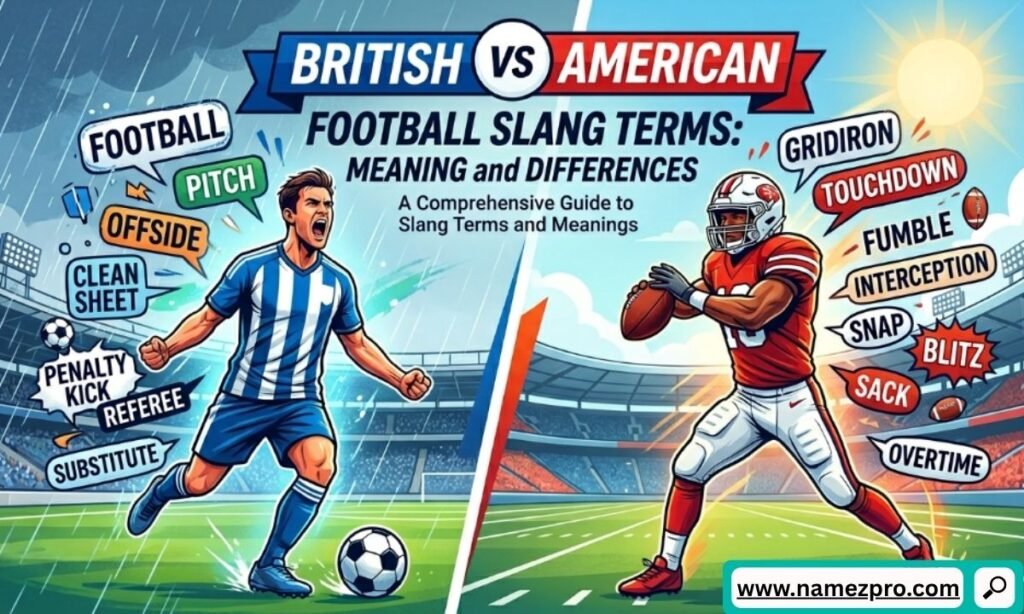
This section is what most articles skip completely. The 2026 World Cup sits on American soil, which means British and American fans share stadiums, broadcasts, and social media feeds simultaneously. The language gap creates real confusion in both directions.
Here’s the translation guide you need:
| British Football Slang | American Equivalent | Meaning |
|---|---|---|
| Pitch | Field | The playing surface |
| Kit | Uniform | What players wear during a match |
| Match | Game | A single competitive fixture |
| Nil | Zero | No goals scored |
| Draw | Tie | Equal score at full time |
| Keeper | Goalie | The goalkeeper |
| Booking | Card / Warning | A yellow card caution |
| Fixture | Matchup | A scheduled game |
| Aggregate | Combined score | Total goals across two legs |
An American viewer hearing “the keeper picked up a booking” for the first time during a Fox Sports broadcast needs this translation immediately. A British fan hearing “the goalie got flagged” feels the same mild confusion going the other direction. Both audiences bring their own football slang terms meaning to the same tournament, and neither version is wrong.
The Funniest Phrases in the Game and What They Mean
Some football slang terms meaning is worth knowing purely for the entertainment value packed into it.
Siiiuuu: Cristiano Ronaldo’s signature goal celebration shout. It spread from football stadiums to TikTok comment sections to everyday group chat messages. American fans now use it to celebrate anything exciting in life, not exclusively goals.
Panenka: A penalty kick where the taker chips the ball softly down the center while the goalkeeper dives hard to one side. Named after Czech player Antonín Panenka who invented the move in the 1976 European Championship final. The most confident penalty in football history became one of its defining moments.
Rabona: Kicking the ball by wrapping the striking foot behind the standing leg. No tactical purpose whatsoever. Pure style. American fans watching it live for the first time tend to rewind the clip at least three times.
Jumpers for Goalposts: A nostalgic British phrase describing informal street football where clothing marks the goal instead of posts. Used today to describe uncomplicated, unpretentious football stripped back to its basics.
Frequently Asked Questions
A clean sheet means the goalkeeper finished the match without conceding a single goal. It’s the football equivalent of a shutout in baseball or hockey. Teams and keepers track clean sheets as a key performance stat across a full tournament.
A nutmeg happens when a player passes the ball directly through an opponent’s legs and collects it cleanly on the other side. It’s one of the most humiliating moments for a defender and one of the most entertaining for everyone watching.
VAR stands for Video Assistant Referee. An official monitors live match footage and alerts the on-pitch referee to review key decisions involving goals, red cards, and penalty situations. American fans often compare it to NFL instant replay reviews.
Squeaky bum time describes the tense, nerve-shredding final minutes of a close match when every second feels enormous. Sir Alex Ferguson invented the phrase and it became one of the most beloved expressions in football broadcasting culture.
Yes. British football slang uses words like pitch, kit, nil, and fixture while American viewers say field, uniform, zero, and game for identical concepts. Both sets of football slang terms meaning describe the same sport through two different cultural lenses.
Now You Know the Language of the Beautiful Game
Football slang terms meaning covers decades of fan creativity, tactical evolution, and broadcaster invention. From a worldie smashed into the top bin to squeaky bum time in the dying seconds, the language of football makes every match bigger than ninety minutes.
The 2026 World Cup runs through July 19. Every match brings new moments, new phrases, and new slang entering the conversation. You’re ready for all of it now.