I was watching the opening match with a group of friends when someone asked a question nobody answered. “Why does everyone keep calling Argentina ‘La Albiceleste’? What does it even mean?” The room went quiet. We all knew Argentina. We all knew Messi. Nobody knew the nickname. Ten minutes later, the conversation exploded. Every single team at this tournament carries a name with a real story behind it. Some stretch back centuries. Some are wildly creative. And a few will genuinely catch you off guard.FIFA World Cup 2026 team nicknames aren’t random labels. They’re identity statements. They carry history, culture, national pride, and sometimes a sharp sense of humor. This World Cup features 48 nations for the first time in history, which means 48 nicknames worth knowing.
What Team Nicknames Tell You About Each Nation
Before going through the names, it’s worth understanding why these nicknames matter at all. International squads don’t play under club names. They play for their nation. A nickname gives fans a shorthand, a rallying point, something to chant in the stands. Something more alive than a country name alone.
Look at the patterns across all 48 FIFA World Cup 2026 team nicknames and three clear categories appear. The first is animal nicknames, mostly fierce creatures, with lions dominating this group almost comically. The second is color-based nicknames, tied directly to the team’s jersey or national flag. The third is cultural or historical nicknames, rooted in language, folklore, or a defining moment in the team’s past.
Did You Know: Germany’s nickname “Die Mannschaft” translates directly to “The Team.” No animals, no colors, no warrior imagery. Simply “The Team.” It became one of the most recognized nicknames in world football by being gloriously ordinary.
Read more: 199+ Dark Humor Fantasy Football Names (Brutal, Twisted & Unforgettable) 2026 Power List 😈🏈
The Lion Kingdom: So Many Teams, One Animal
Here’s the thing: a shocking number of World Cup nations call themselves lions. Walk through the tournament bracket and the lion count hits you fast.
England carries the most famous version. The Three Lions nickname traces back to King Richard I, who used three gold lions on his royal crest in the 12th century. Those same lions ended up on the Football Association badge in 1872. When fans sing “Three Lions” in the stands, they echo a symbol older than the sport itself.
Morocco goes by the Atlas Lions, named after the Atlas Mountain range crossing North Africa. The nickname carries pride in geography and strength simultaneously. After Morocco became the first African nation to reach a World Cup semifinal in 2022, “Atlas Lions” took on a completely new weight for the global football audience.
Senegal brings the Lions de la Téranga. “Téranga” is a Wolof word meaning hospitality. Their full nickname translates roughly as “Lions of Hospitality,” blending ferocity on the pitch with warmth off it. It says everything about how Senegalese culture projects itself to the world.
Cameroon goes by the Indomitable Lions. “Indomitable” means impossible to subdue or defeat. For a team known for producing some of Africa’s most physical and tenacious football, the word fits perfectly.
Four lion-named teams. Four completely different stories behind the same animal.
Color Nicknames: When the Jersey Becomes the Identity
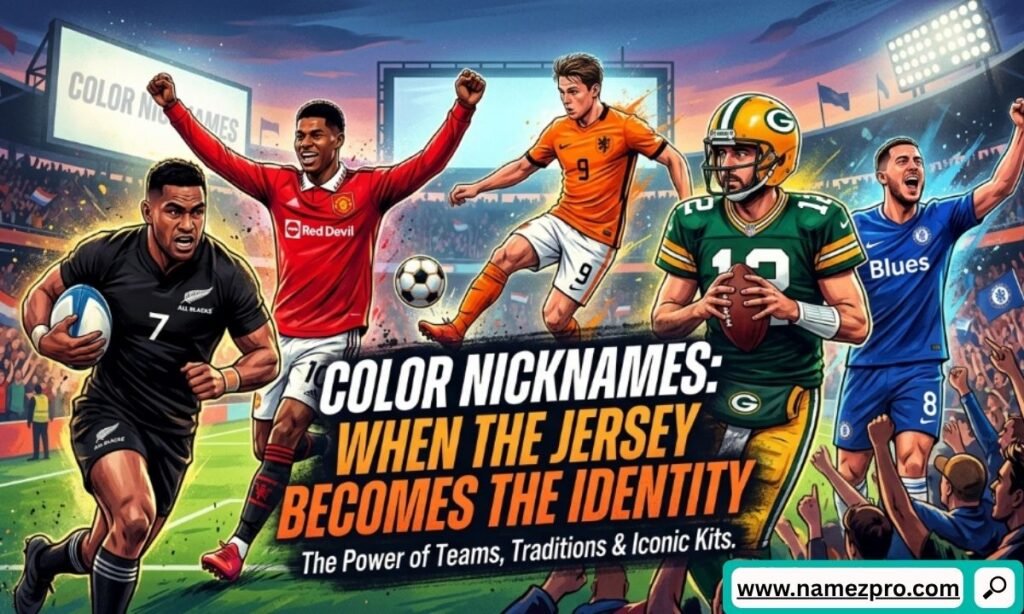
Some teams skip the symbolism entirely and name themselves after what they wear. These nicknames look deceptively simple on paper but carry enormous cultural weight behind them.
France’s Les Bleus is the most recognizable color nickname in world football. “The Blues” sounds plain. But behind it sit two World Cup trophies, a generation of players who made France the center of global football culture, and a nickname spoken in millions of conversations every four years. Color nicknames work when the team’s success gives the color meaning.
The Netherlands goes by Oranje, meaning “orange.” The Dutch national color runs through their entire sporting culture, not just football. When the Netherlands plays, entire stadium sections turn orange. The nickname and the visual identity are inseparable at this point.
Argentina’s La Albiceleste describes the iconic vertical stripes on their jersey, combining “albo” (white) and “celeste” (sky blue), which mirror the Argentine national flag. For a country where football is close to religion, wearing the albiceleste jersey carries genuine emotional weight far beyond sport.
Canada, one of the three host nations this tournament, goes by Les Rouges, meaning “The Reds.” Simple, clean, tied directly to the red of the Canadian flag.
Read Also: 🎉 269+ Funny College Football Player Names 2026 That’ll Make You Laugh Hard 😂🏈
Cultural Warriors: Nicknames With Real History Behind Them
This is where the FIFA World Cup 2026 team nicknames get genuinely interesting.
Japan’s Samurai Blue bridges centuries of Japanese cultural identity with modern football. “Samurai” references Japan’s ancient warrior tradition, symbolizing discipline, honor, and courage, while “Blue” refers to the color of their home shirt. No other team at this tournament pulls off history and jersey color in two words quite as effectively.
Croatia goes by two nicknames. Vatreni translates to “The Fiery Ones” or “The Blazing Ones” in Croatian. Their second nickname, Kockasti, means “The Checkered Ones,” referencing the red-and-white checkerboard pattern on Croatia’s crest. Given Croatia’s run to the 2018 World Cup final, “Fiery Ones” feels completely earned.
Spain carries La Furia Española, born at the 1920 Antwerp Olympics, when Spain beat Sweden with such ferocious intensity that Belgian journalists coined the phrase. A century later, the nickname endures. Spain also goes by La Roja, meaning “The Red One,” a direct reference to their jersey color.
Brazil’s A Canarinha means “The Little Canary,” referencing the bright yellow of their home jersey, which matches the saffron-colored canary bird. Brazil’s yellow jersey is one of the most iconic in world sport, and the nickname captures the elegance people associate with Brazilian football at its finest.
The Wildcard Nicknames Nobody Expects
A handful of FIFA World Cup 2026 team nicknames break every pattern and stand entirely on their own.
Australia’s Socceroos is one of football’s most creative nicknames. Australia became the first country to blend the sport’s name with their national animal to create a global identity, perfectly capturing the Australian spirit: informal, distinctive, and impossible to forget. No other nation in this tournament comes close to this level of wordplay.
Algeria carries the nickname The Fennecs, referring to a small fox native to the Northern African desert. For a team known for tactical cleverness rather than sheer physical power, the fennec fits better than any lion would. Algeria also goes by The Desert Warriors and The Greens.
Belgium operates under the Red Devils, but what makes their nickname genuinely interesting is the language situation. Belgium has three official languages, so the Red Devils appear as De Rode Duivels in Dutch, Les Diables Rouges in French, and Die Roten Teufel in German. One team, one nickname, three versions. No other nation at this World Cup runs their identity across three languages simultaneously.
Mexico goes by El Tri, short for El Tricolor, meaning “The Three Colors,” referring to the green, white, and red of the Mexican flag. Confusingly, Ecuador also goes by La Tri. Two different teams, nearly identical nicknames, different languages.
Related Post: 250+ Best Dallas Cowboys Fantasy Football Names (2026): Winning & Witty!
The Three Host Nations and What Their Names Say
The United States goes by The Stars and Stripes, directly referencing the American flag. It fits a host nation leaning hard into national symbolism ahead of the biggest sporting event ever held on US soil.
Mexico runs with El Tri, a nickname carrying decades of passionate fan culture. It remains one of the most recognized football identities in North America and fills stadiums before a single whistle blows.
Canada’s Les Rouges is newer in terms of international recognition, but as a co-host nation making a serious push to be taken seriously in world football, the nickname carries growing weight with every match.
Frequently Asked Questions
La Albiceleste is Argentine Spanish combining “albo” (white) and “celeste” (sky blue), describing the colors of Argentina’s jersey and national flag.
Lions represent strength, pride, and national power. Countries across Africa, Europe, and the Middle East independently chose the lion as their identity symbol, resulting in multiple lion-named teams appearing at every World Cup.
Die Mannschaft is a German word meaning simply “The Team.” Despite its plainness, it became one of the most recognized team nicknames in world football.
Vatreni is a Croatian word meaning “The Fiery Ones” or “The Blazing Ones.” It is the primary nickname for Croatia’s national football team.
Australia’s Socceroos wins by a wide margin. It combines “soccer” with “kangaroo,” making it the only World Cup team nickname built from a word invented specifically for the team.
Final Thoughts
Every team at this tournament carries more than a jersey and a flag. The FIFA World Cup 2026 team nicknames hold centuries of history, language, culture, and national identity inside them. Next time you hear “Les Bleus,” “Samurai Blue,” or “The Socceroos,” you’ll know exactly what’s behind the name.