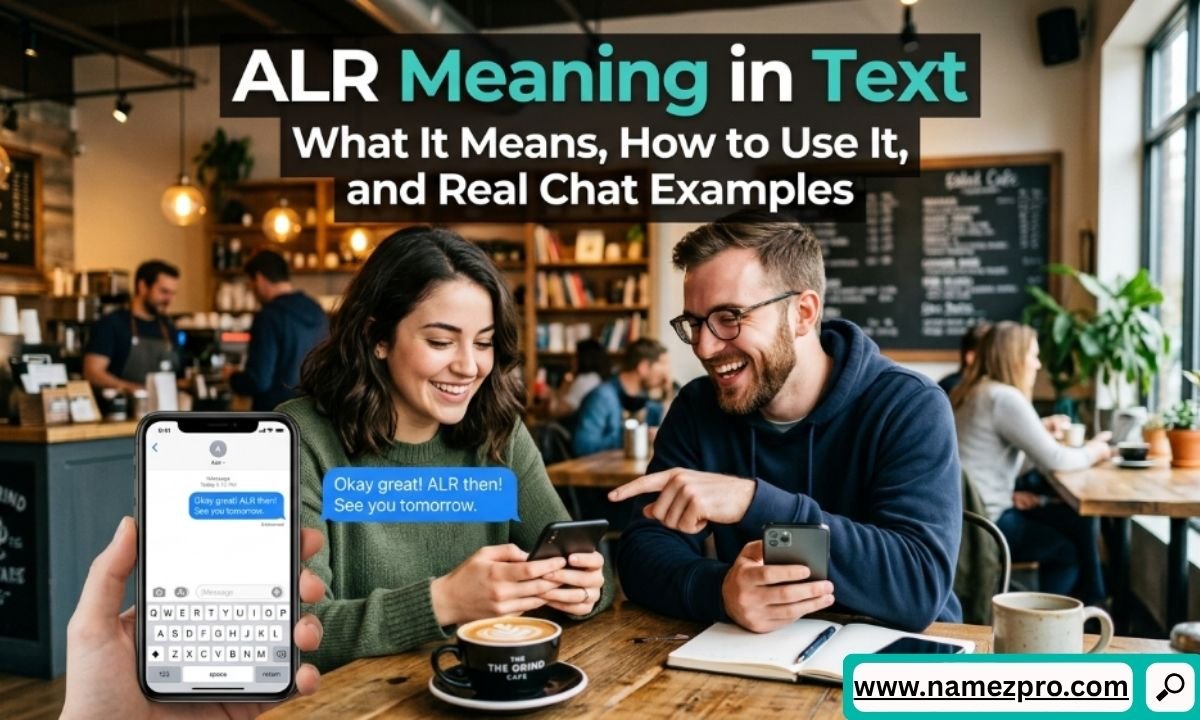
You’re mid-conversation with your best friend, texting back and forth about weekend plans, and then it happens. She sends one word back: “alr.” No emoji. No exclamation point. Just three letters sitting there on your screen while you stare at your phone wondering what you did wrong. Did she get busy? Is she annoyed? Did the conversation just end without you knowing it? If you’ve ever felt this exact moment of confusion, you’re not alone, and understanding ALR meaning in text is the fastest way to stop overthinking every short reply you get. This guide breaks down what ALR stands for, how the tone shifts depending on punctuation and platform, and gives you real chat examples so you never have to guess again.
Now that you’ve got ALR sorted, why not tackle your next tricky decision? Our free Name Generator tool gives you name ideas in seconds, no overthinking required.
Get instant name ideas no signup needed
ALR Meaning in Text: The Real Definition
Let’s start with the short answer. ALR is a shortened version of “alright,” used in texting, DMs, and online chat to show agreement, acknowledgment, or acceptance. It’s one of the most common texting abbreviations in casual digital communication today, right up there with “k” or “sure.” When someone types ALR, they’re saying “okay” without spending the extra few seconds typing out the full word.
Here’s the thing though. ALR occasionally means “already” instead of “alright.” If a friend texts “I ate alr,” they don’t mean “I ate alright,” they mean “I already ate.” This second meaning shows up far less often, but it trips people up when the sentence structure doesn’t fit the usual “okay, fine, agreed” pattern. The ALR abbreviation only makes sense once you read the full sentence around it, not the three letters alone.
So what does ALR mean in text, in one sentence? Ninety percent of the time, it’s alright. The remaining slice is already. Context tells you which one you’re looking at, and once you know that, the ALR text meaning stops feeling like a mystery.
What makes this abbreviation tricky isn’t the definition itself. It’s the tone. Two people can send the exact same three letters and mean completely different things, which is why so many people search for ALR meaning in text instead of just assuming it’s simple.
Why People Type ALR Instead of Alright
Texting culture runs on speed. Nobody wants to type out a full sentence when three letters get the same point across, and this is exactly why ALR internet slang caught on so fast among Gen Z and younger millennials. Typing “alright” takes seven keystrokes. Typing “alr” takes three. Multiply that across hundreds of texts a day and the time saved adds up, especially in fast-moving group chats or gaming sessions where a slow reply gets buried under twenty new messages.
There’s a second reason people lean on ALR in texting that most articles skip entirely. Read receipts changed how people reply. When someone knows you’ve seen their message, there’s a quiet pressure to respond fast, even if you don’t have much to say. ALR became the perfect low-effort acknowledgment. It says “I saw this, I’m fine with it, moving on” in the time it takes to tap three keys. This is part of why ALR shows up so often right after someone reads a message and doesn’t feel like typing a full reply.
Gen Z slang tends to follow this same pattern of shrinking common phrases into quick shorthand. Think about how “for real” became “fr,” or how “no cap” replaced “I’m not lying.” ALR fits into this same texting culture of compression, where speed and low effort matter more than full sentences. It’s not laziness exactly. It’s a shift in how digital communication works when everyone is typing on a phone screen instead of writing letters.
Once you understand the “why” behind ALR meaning in text, the abbreviation stops feeling random and starts making a lot more sense as part of a bigger texting pattern.
Read Also: SP Meaning in Text: What It Means in Chat, Social Media, and Texting
The Autocorrect Problem Nobody Explains
Here’s something every other guide on this topic misses completely. Your keyboard doesn’t always let you type “alr” the way you want to.
On iPhone and Android, autocorrect frequently capitalizes ALR into all caps, which visually reads like shouting even when the sender meant something totally casual. Other times, autocorrect swaps “alr” for a real dictionary word entirely, turning your quick reply into something that makes no sense in context. This happens because most keyboard dictionaries don’t recognize “alr” as an intentional word, so the software tries to “fix” it.
Did You Know? You can stop this by setting up a text replacement shortcut. On iPhone, go to Settings, then General, then Keyboard, then Text Replacement, and add “alr” as a shortcut that expands to itself or stays exactly as typed. Android users can do something similar through Gboard’s personal dictionary settings. This one small fix stops your ALR meaning in text from getting mangled mid-conversation.
This matters more than it sounds. A text that reads “ALR” in caps can come across as cold or frustrated, even when the sender just got autocorrected without noticing. If you’ve ever received an all-caps “ALR” and wondered if someone was mad at you, there’s a real chance it wasn’t intentional tone at all. It was just a keyboard doing its own thing. Understanding this mechanic takes a lot of the guesswork out of reading short replies, and it’s one of the most practical, least talked about pieces of the whole ALR abbreviation conversation.
Does Punctuation Change What ALR Means?
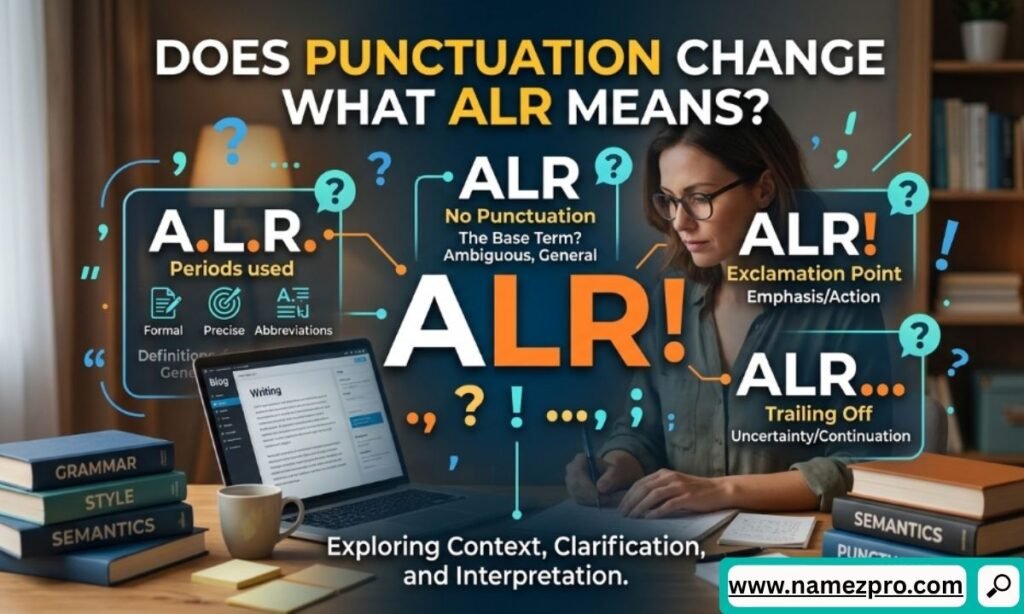
Three letters carry a surprising amount of emotional weight depending on what comes after them. This is one of the most overlooked parts of ALR meaning in text, and it’s worth slowing down on.
“Alr” by itself, no punctuation, generally reads as neutral to friendly. It’s the digital equivalent of a casual nod. Add a period, though, and the tone shifts. “Alr.” feels clipped, sometimes even a little annoyed, because a period at the end of a short text often signals finality in a way that feels more serious than the message itself. This isn’t unique to ALR either. Millennials and Gen Z both tend to read a period at the end of a short text as slightly cold, a pattern linguists have pointed out for years.
Add an exclamation point and everything flips again. “Alr!” reads as enthusiastic, upbeat, genuinely excited to agree. Stack on an ellipsis, like “alr…”, and you get something closer to reluctant acceptance, the texting version of a sigh.
A short table makes the pattern easier to see at a glance.
| Punctuation Style | How It Usually Feels |
|---|---|
| alr | Neutral, casual, easygoing |
| Alr. | Clipped, possibly annoyed or final |
| alr! | Enthusiastic, warm agreement |
| alr… | Reluctant, hesitant acceptance |
| alr 🙂 | Friendly, warm confirmation |
| ALR | Often accidental caps from autocorrect, can misread as shouting |
None of this is set in stone. Tone always depends on the relationship between the two people texting and the conversation leading up to that moment. But once you notice how much a single punctuation mark shifts the emotional tone, you start reading texts with a lot more accuracy.
Read Also: MyB Meaning in Text: What It Really Means in Chats and Social Media
When to Use ALR (and When Not To)
Every other guide on this topic tells you “it depends on context” and stops right there. That’s not actually useful advice, so here’s an actual framework you can use in the moment.
Texting a close friend or sibling? ALR is completely fine on its own, no explanation needed. This is the most casual texting relationship there is, and short replies are expected and normal.
Texting a partner, especially mid disagreement or during a serious conversation? Skip ALR entirely. A bare “alr” in an emotionally loaded moment often reads as dismissive, even if that’s not the intent, because it signals you’re rushing past something that matters to the other person.
Group chats and gaming chats? ALR works great here too. It’s fast, it keeps the conversation moving, and nobody expects a full sentence when twenty messages are flying by every minute.
Texting a boss, professor, or someone in a formal work setting like Slack or Teams? This is where ALR usage gets risky. It reads as too casual for most professional communication, even in workplaces with a relaxed internal chat culture. “Sounds good” or “Got it” does the same job without the informal edge.
A short guide before you type it:
- Close friends and family: ALR works fine, no explanation needed
- Romantic partner during a light, casual moment: fine
- Romantic partner during a serious or emotional conversation: avoid it, use full sentences instead
- Group chats and gaming chats: fine, keeps things moving
- Coworkers you’re friendly with: use your judgment based on how casual your workplace chat culture already is
- Boss, client, or professor: avoid it, stick to “okay” or “understood”
This framework matters more than a vague “read the room” suggestion because it gives you an actual decision to make in three seconds, which is usually all the time you have before hitting send.
Read Also: Dawgs Slang Meaning: What “Dawgs” Really Means in Text & Social Media
ALR Meaning on WhatsApp, Discord, Instagram, and Other Apps
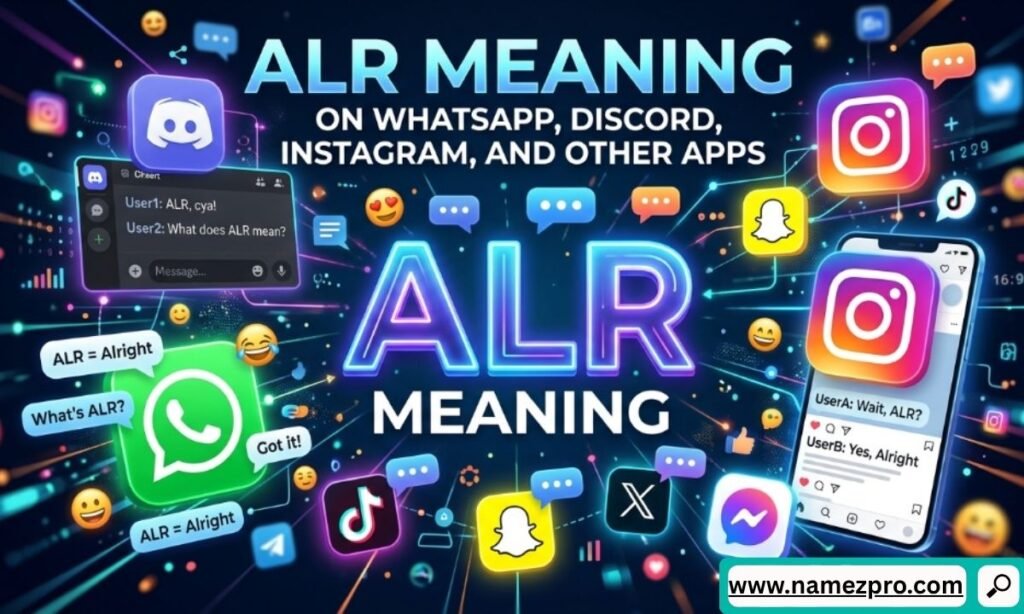
Most guides list the same five apps next to ALR and stop there, without explaining why the abbreviation behaves differently depending on where you’re typing it. The platform actually shapes the tone, not just the letters.
On WhatsApp, read receipts show up as blue double ticks, so the person you’re texting already knows you saw their message before you even reply. This turns ALR into a quick way to close the loop without leaving someone wondering if you’re ignoring them. It’s especially common in family group chats and long-distance friendships, where quick check-ins matter more than long replies.
On Discord, ALR shows up constantly in server chats and voice channel text boxes, often typed between fast-moving conversations during a game or a group call. Since Discord conversations move quickly and often overlap with voice chat, ALR works as a fast written confirmation while people are talking over a headset at the same time.
Instagram DMs and TikTok comments carry a slightly different flavor. Both platforms lean casual and public-facing, so ALR in a comment section often adds a light, agreeable tone to a reply rather than serving as a direct one-on-one acknowledgment. On Snapchat, where messages can disappear after viewing, ALR functions almost like a quick nod before the conversation moves on to the next snap.
None of this changes the core ALR meaning in text. Alright stays alright no matter which app you’re using. What changes is the pace and expectation around the reply, and understanding that context helps you read tone more accurately no matter where the message lands.
Texting shortcuts aren’t the only thing that saves you time. Try our free Name Generator tool next time you’re stuck naming a pet, a project, or a new account.
Get instant name ideas no signup needed
Does ALR Mean Something Different From a Girl or a Guy?
A common myth floating around is that ALR meaning from a girl carries a different emotional weight than ALR meaning from a guy. In reality, gender doesn’t change the definition or the underlying tone rules at all. A cold, clipped “alr.” feels distant regardless of who sends it, and a warm “alr!” feels enthusiastic no matter who’s typing it.
What actually shifts tone is texting style, relationship history, and how that specific person usually communicates, not gender. Someone who rarely uses punctuation might send “alr” completely neutrally as their normal pattern, while someone who always adds emojis might mean the same thing even without one, simply because they’re in a rush. Reading ALR accurately means paying attention to how that individual person usually texts, rather than applying a blanket rule based on who sent it.
ALR in Real Conversations (Chat Examples)

Reading definitions only gets you so far. Real conversation examples show how ALR meaning in text actually plays out when people are texting each other in the moment.
Example 1: Making plans Friend: “Pick you up at 7?” You: “alr, see you then” This one’s neutral and friendly. No tension here at all.
Example 2: A sibling situation Sibling: “I borrowed your charger, hope that’s fine” You: “alr…” The ellipsis signals mild annoyance without starting an actual fight over it.
Example 3: Gaming chat Teammate: “Rotate to B site, I’ll cover you” You: “alr bet” Quick, confident acknowledgment, common in gaming chats where speed matters more than full sentences.
Example 4: Dating app or new DM Match: “Wanna grab coffee Saturday?” You: “alr! sounds fun” The exclamation point turns a basic agreement into something warm and genuinely interested.
Example 5: A slightly tense exchange Partner: “We need to talk when you get home” You: “alr.” This one reads cold, almost avoidant, and probably isn’t the best reply in a moment that clearly needs more than three letters.
Example 6: WhatsApp family group chat Mom: “Dinner’s at 8, don’t be late” You: “alr mom, on my way” Warm and casual, the kind of reply that fits naturally into a family group thread with blue ticks already showing she’s seen you’re on your way.
Example 7: Discord server during a game Teammate: “Meet at the objective in 30 seconds” You: “alr” No punctuation, no extra words, just a fast confirmation typed between rounds while everyone’s talking over voice chat at the same time.
These seven examples show how identical letters shift completely depending on punctuation, platform, relationship, and context. The words never change. The feeling behind them does.
ALR vs Alright vs Ight vs Aight: What’s the Difference
ALR isn’t the only shortened version of “alright” floating around in texting culture, and knowing the small differences between similar terms helps you pick the right one for the moment.
“Alright” is the full, proper word, appropriate anywhere including formal writing and professional communication. “Alr” is the fast, casual texting version, appropriate for friends, group chats, and informal DMs. “Ight” drops even more letters and leans slightly more into internet slang and meme culture, often showing up in comment sections and gaming chats. “Aight” is closer to a phonetic spelling, often used with a slightly playful or exaggerated tone, popular in captions and comments more than direct texting.
A quick side by side makes the differences clearer.
| Term | Best Used For | Tone |
|---|---|---|
| Alright | Formal writing, professional messages | Neutral, proper |
| Alr | Texting friends, group chats, casual DMs | Casual, quick |
| Ight | Comments, gaming chats, meme replies | Playful, internet-native |
| Aight | Captions, exaggerated casual tone | Relaxed, slightly stylized |
None of these are interchangeable in every setting. Texting your professor “ight” instead of “alright” sends a very different signal than you probably intend. Picking the right version comes down to matching the term to the platform and the relationship, the same way you’d naturally switch between texting slang and full sentences depending on who you’re talking to.
ALR also gets compared to other quick agreement words that mean roughly the same thing but land differently in a conversation. Here’s how the most common ones stack up against each other.
| Comparison | The Difference |
|---|---|
| ALR vs OK | ALR feels more current and casual, OK feels neutral and slightly more formal |
| ALR vs Bet | Bet carries more excitement and confidence, ALR is calmer acknowledgment |
| ALR vs K | K often reads as blunt or even irritated, ALR feels softer and more relaxed |
| ALR vs Sure | Sure can sound hesitant, ALR usually feels more decided and settled |
| ALR vs Got it | Got it confirms understanding of instructions, ALR confirms general agreement |
Swapping one for another changes the emotional read of a text more than people realize. Texting “k” back to a friend who just apologized, for example, lands very differently than texting “alr,” even though both technically mean the same thing on paper.
Read Also: WTV Meaning in Text: Everything You Need to Know in 2026
How to Reply to “Alr” Without Sounding Awkward
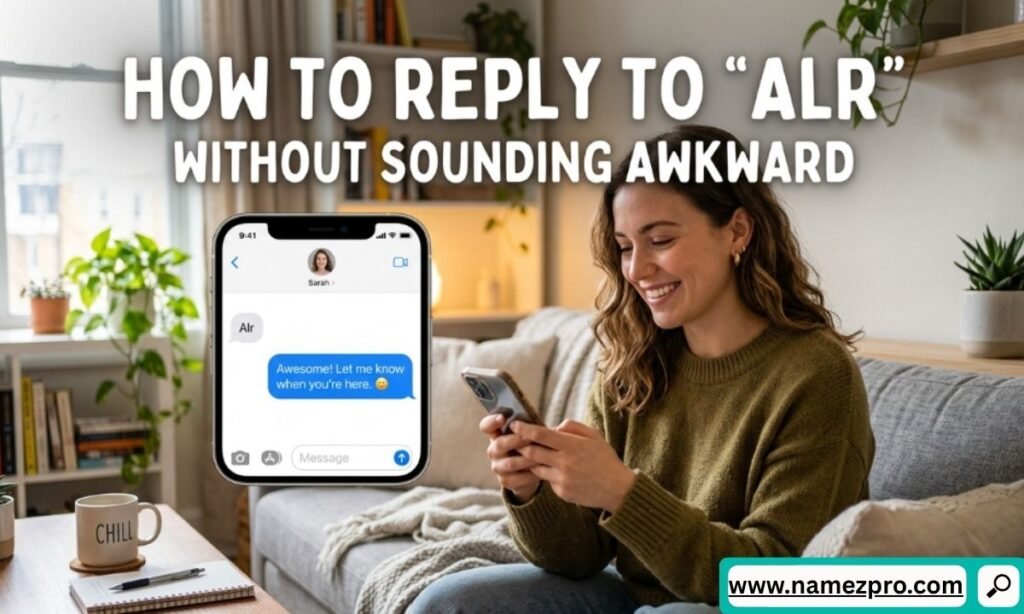
Getting an “alr” back is one thing. Knowing how to respond to it is a whole separate skill, and it’s something most guides skip entirely.
If the “alr” felt warm and casual, mirroring the tone works fine. A simple “bet” or “for sure” keeps the conversation flowing at the same easy pace. If the “alr” felt neutral but you want to keep the conversation open, adding a small follow up question does the trick, something like “alr, you good though?” This signals you noticed the short reply without making it a big deal.
If the “alr” felt cold or clipped, especially with a period at the end, you have two solid options depending on the situation. You can let it go and give the other person space, which works well if they might just be busy or distracted. Or, if something feels off and you want clarity, a direct but low-pressure follow up like “everything okay?” opens the door without sounding accusatory.
Here’s what to avoid: matching a cold “alr.” with an equally clipped reply of your own. This usually escalates tension rather than resolving it, turning a possibly unintentional short reply into an actual standoff. Most of the time, a one-word cold reply is about the sender’s mood or timing, not a hidden message about you specifically, so reading too much into a single “alr” often creates more confusion than it solves.
Read Also: BM Meaning in Text: Everything You Need to Know in 2026
FAQs About ALR in Texting
Is ALR the same as OK?
They’re close but not identical. ALR carries a slightly more casual, modern feel compared to the more neutral, almost formal-sounding “OK,” and Gen Z tends to reach for ALR in situations where “OK” feels a touch too flat or old-fashioned.
Is it rude to text just “alr”?
Not inherently. A bare “alr” without punctuation usually reads as neutral to friendly, though adding a period can shift it toward feeling cold or dismissive depending on the conversation.
Does ALR mean something different on Snapchat or TikTok?
The core meaning stays the same across platforms. On Snapchat and TikTok specifically, it often shows up in comments and quick replies as a fast way to agree or acknowledge something, matching the fast-paced, low-effort communication style both apps encourage.
Can ALR mean “already”?
Yes, though it’s the less common usage. “I did it alr” means “I already did it,” and you can usually tell which meaning applies based on the sentence structure around the abbreviation.
Is it okay to use ALR in work chats like Slack or Teams?
It depends heavily on your workplace culture. In relaxed, informal teams it might pass without issue, but in most professional settings, sticking with “sounds good” or “understood” reads as more polished and avoids any risk of coming across too casual.
Conclusion
ALR meaning in text comes down to one simple word: alright. But as you’ve seen, the real skill isn’t memorizing the definition, it’s reading the punctuation, matching the tone to the relationship, and knowing when a quick three-letter reply fits the moment and when it doesn’t. Fix your autocorrect settings so the abbreviation types the way you intend, pay attention to whether a period sneaks in at the end, and use the framework above before you hit send in a work chat or a serious conversation. Once you’ve got these small details down, you’ll read every “alr” you get with a lot more confidence, and you’ll know exactly how to send one back.
You’ve mastered one kind of shorthand today. Let our free Name Generator tool handle the next one when you need a name fast.
Get instant name ideas no signup needed