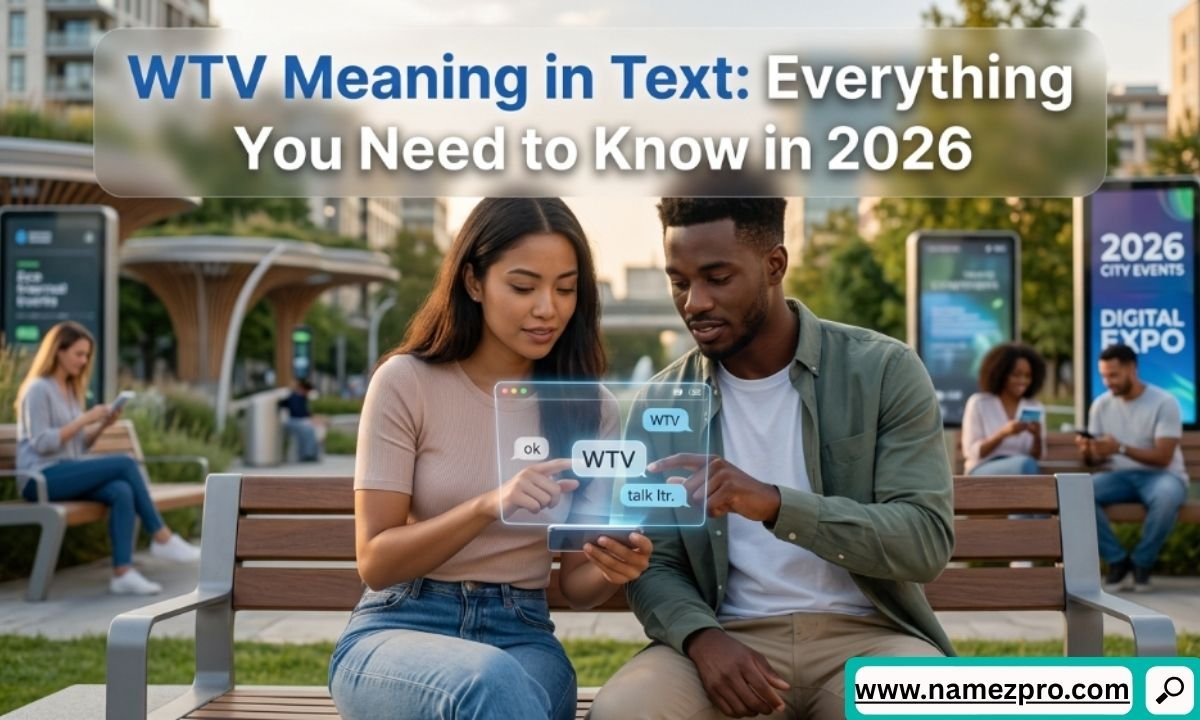
You’re mid-conversation with a friend, feeling fine about how things are going, when a single reply lands in your chat: wtv. Three letters, and suddenly you’re rereading your last five messages trying to figure out what you did wrong. Here’s the thing: figuring out the WTV meaning in text isn’t hard on the surface. It stands for “whatever.” What’s hard is knowing whether it means “I’m easy either way” or “I’m done talking about this.” This guide covers both, plus the parts nobody else explains: how punctuation changes the read, how to reply depending on who sent it, and how a group chat changes everything.
Quick note before the slang: anyone who landed here because a video file with a .wtv extension won’t open on a computer is looking at something different, a Windows Media Center recording format, not a texting abbreviation. This guide covers the text message version only.
Quick Answer: The WTV meaning in text comes down to one word, “whatever.” People use it in texting, Snapchat, Instagram, TikTok, and WhatsApp to show they don’t have a strong opinion, don’t want to argue further, or don’t feel invested in a topic. The tone ranges from relaxed to short and cold, and punctuation usually gives away which one landed in your chat.
Speaking of picking the right words, an outdated gamer tag or username deserves an upgrade too. Grab a few fresh ideas from our free Name Generator before you keep reading.
Get instant name ideas no signup needed
What Does WTV Mean in Texting?
Start simple. WTV is a texting abbreviation for the word “whatever.” Nothing complicated sits under it. When someone texts wtv, they’re telling you they don’t have a strong preference, they don’t want to keep debating a point, or they’re stepping back from a decision and handing it to you. This is the whole WTV meaning in text in one sentence: whatever, nothing more hidden underneath.
The letters themselves carry one meaning. What changes is the emotional tone in texting sitting underneath them, and this is where most people get stuck. A relaxed wtv and an irritated wtv look identical on a screen. Only the surrounding conversation tells you which one you got.
Here’s a simple exchange showing the calm version:
Person A: Pizza or tacos tonight? Person B: wtv, both sound good to me
Notice this reply comes with an extra sentence attached. This is a signal by itself, and one covered in more depth further down.
WTV shows up constantly in casual texting, group chats, and comment sections, largely because it saves time. Typing four letters instead of eight is a small win, but multiplied across millions of messages a day, it adds up to a habit. This is the same reason abbreviations like idk, brb, and lol stuck around long after typing got faster with autocorrect and swipe keyboards.
Bottom line: the core definition never wavers. It’s the tone, timing, and platform layered on top deciding how a reader takes it, and those layers make up the rest of this guide.
Read More : BM Meaning in Text: Everything You Need to Know in 2026 ✨
The Origin of WTV’s Meaning in Texting
Every internet abbreviation has a starting point, and WTV traces back to the early days of SMS texting and instant messaging chatrooms in the early 2000s. Phones back then had physical keypads, and typing a full word meant pressing the same key three or four times per letter. Shortening “whatever” down to four letters saved real effort, not a hobby, a necessity.
Chat platforms like AIM and MSN Messenger picked up the trend around the same time, since character limits and slow dial-up connections rewarded brevity. Once texting culture spread, teens carried the abbreviation with them, and it settled into everyday texting language alongside brb, lol, and idk.
What’s worth noting: the WTV meaning in text hasn’t shifted since then. The word behind it, “whatever,” has meant the same thing in English for generations. What’s changed is how loaded the word feels now. Decades of pop culture, from the “whatever” hand gesture in 90s films to its use as a dismissive catchphrase, gave the word extra weight before texting ever shortened it.
So when a modern reader sees wtv, they’re inheriting two things at once: a decades-old cultural association with mild dismissiveness, and a texting shortcut born from nothing more than slow keypads and smaller screens. Both pieces explain why the word still carries so much interpretive weight today.
The Different Tones Behind WTV Meaning in Text
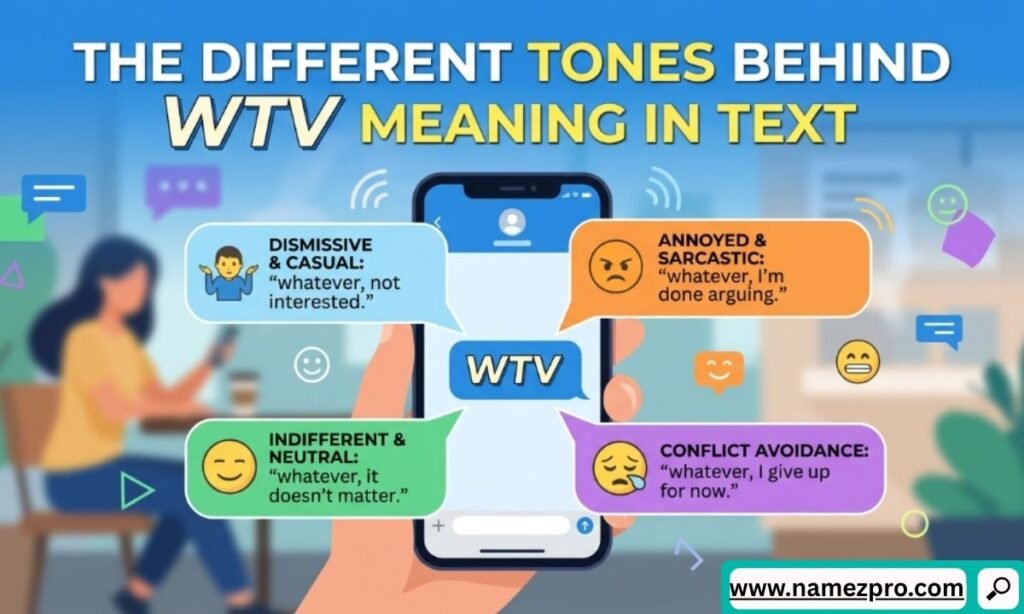
This is the section most competitors rush through, and it’s the one readers need most. The WTV meaning in text changes with tone, not with the letters themselves. WTV carries at least four distinct emotional registers, and reading them correctly comes down to context, punctuation, and what came right before the message.
Neutral and easygoing is the most common version. Someone types wtv because they don’t hold a preference, and the conversation moves on without friction.
Person A: Movie night, comedy or horror? Person B: wtv, I’m down for either
Mildly annoyed is the second version, and it shows up after a disagreement or a repeated question.
Person A: Come on, you always pick where we eat Person B: wtv, you choose then
Notice the second exchange carries an edge the first doesn’t, even though the word is identical. The difference sits in what came before it: a complaint versus a simple either-or question.
A third register is dismissive, closer to shutting a topic down entirely rather than stepping back from a decision. A fourth is playful, often paired with an emoji or a laughing reaction, and reads as a joke between people comfortable enough to tease each other.
This is where texting etiquette matters more than the dictionary definition. On TikTok and Instagram comment threads, wtv tends to lean playful or sarcastic, since the format encourages quick, low-stakes replies. On WhatsApp, where conversations often run longer and more personal, the same word tends to read as more neutral unless the conversation already carries tension.
Reading WTV correctly means reading the five messages before it, not the word by itself.
Read Also: What Does ICL Mean in Text? Complete Guide with Examples 📲✨
Is WTV Rude? What This Meaning Signals
Short answer: not by default, though it lands cold more often than the sender expects, especially over text where nobody hears tone of voice. When people search for the WTV meaning in text, most are trying to answer one question underneath it: is it rude to send or receive.
A single “wtv” dropped into a conversation with no punctuation, no emoji, and no follow-up sentence tends to read as cold, even if the sender meant nothing by it. Texting strips out facial expression and vocal tone, so a reader fills in the gap with whatever mood they’re already in. Someone having a rough day reads a bare “wtv” as dismissive far more often than someone in a relaxed mood does.
Here’s an example where the same reply lands two different ways depending on the reader’s state of mind:
Person A: I think we should talk about what happened last night Person B: wtv
Read it on a calm day, and it looks like someone stepping back from an argument they don’t want to reopen. Read it on a tense day, and it looks like someone shutting the door completely.
The fix isn’t complicated. Adding even a few extra words softens the reply without losing the meaning behind it. “wtv, we don’t need to go over it again” reads completely differently from a bare “wtv” with nothing else attached.
Is WTV offensive on its own? Rarely. Is it capable of feeling offensive depending on timing and history? Often. Timing and history decide more than any fixed rule about the word itself.
WTV vs IDC vs Whatevs: What Sets Them Apart
Comparing the WTV meaning in text to nearby phrases makes the differences clearer, and lumping them together is a mistake most articles make. Each one carries a slightly different emotional weight, even though they all point toward indifference on the surface.
IDC (“I don’t care”) reads blunter and more direct. It skips past politeness entirely. Whatevs, the older, unabbreviated cousin of wtv, tends to feel warmer and a bit more playful, closer to something said out loud between friends than typed quickly in a rush. WTVR and WTVS are close variants of the same word, usually seen on Discord and gaming chats, and carry roughly the same tone as wtv itself.
A short comparison makes the differences easier to see:
| Phrase | How It Typically Feels |
|---|---|
| wtv | Casual, quick, tone depends on context |
| idc | Blunt, direct, sometimes flat |
| whatevs | Playful, warmer, often joking |
| wtvr / wtvs | Same as wtv, common in gaming and Discord |
| k | Short and often cold, rarely neutral |
Here’s an exchange showing how swapping the word changes the feel of an identical situation:
Person A: Should we reschedule? Person B: idc, up to you
Swap “idc” for “wtv” in the same reply, and the tone softens slightly, since wtv carries a touch more flexibility than the flatter, more clipped idc.
None of these phrases are interchangeable once tone gets factored in. Choosing the right one, or reading the right one correctly when it lands in an inbox, comes down to recognizing these small differences instead of treating every dismissive-sounding reply the same way.
Gaming chats run on shorthand like wtvr, but your username still needs personality. Our free Name Generator builds that part for you in seconds.
Get instant name ideas no signup needed
How to Reply Once You Know the WTV Meaning in Text
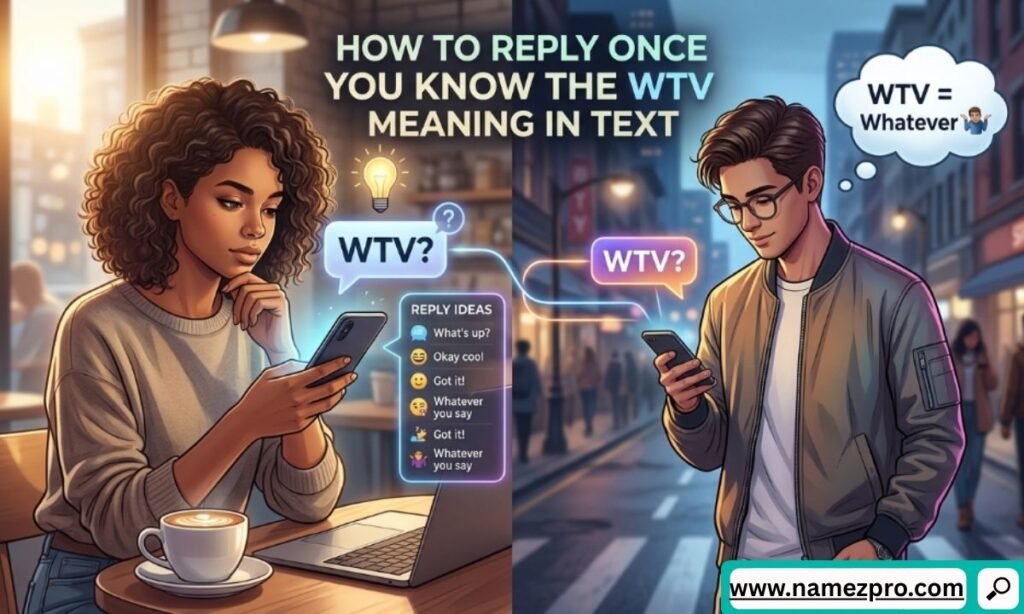
This is the part missing from nearly every guide on WTV meaning in text: what to type back. Knowing the definition doesn’t help much in the moment a “wtv” lands in a chat and the reply box is sitting empty.
The right reply depends heavily on who sent it. A partner, a friend, and a coworker all call for a different response, even to the exact same three letters.
From a partner, especially after a disagreement, a bare “wtv” usually means the conversation feels unresolved. Matching it with another flat reply tends to escalate things.
Person A: wtv, forget it Person B: I don’t want to drop this. Are you free to talk in a few minutes?
Notice this reply avoids mirroring the same flatness, and instead opens the door back up without forcing an immediate conversation.
From a friend making plans, a “wtv” is usually genuine flexibility, not tension. A light reply keeps the exchange moving.
Person A: Coffee or the diner? Person B: wtv works for me Person A: coffee it is then
From a coworker or in a professional communication setting, “wtv” rarely shows up at all, and if it does, a neutral, slightly more formal reply keeps things smooth. “No problem, either time works for me” reads better than mirroring the casual tone back.
A short rule covers most situations: match energy with people close to you, and add a touch more warmth or formality with people known less well. Reading the room, more than the dictionary definition, decides the right reply nearly every time.
See Also: WS Meaning in Text: What This Popular Acronym Really Means 😎📱
Does Punctuation Change What WTV Means?
Here’s a mechanic almost nobody covers: the punctuation attached to “wtv” shifts the WTV meaning in text as much as the word itself does.
A bare “wtv” with no period and no follow-up tends to read as neutral or quick, especially in a fast-moving group chat. Add a single period, and the tone shifts toward finality or mild frustration. A single dot at the end of a short text is a well-documented signal in texting research: a period after a brief reply often signals seriousness or annoyance, since normal casual texting skips punctuation entirely.
Letter repetition works differently. Stretching the word into “wtvvv” or “wtvvvv” usually softens it, turning a flat dismissal into something closer to a joke or an exaggerated shrug. Full capitals, “WTV,” tend to read as louder and more emphatic, closer to shouting the word than typing it casually.
A quick side-by-side helps make this concrete:
| Version | Typical Read |
|---|---|
| wtv | Neutral, casual, low stakes |
| wtv. | Sharper, closer to final or annoyed |
| wtvvv | Playful, exaggerated, often joking |
| WTV | Loud, emphatic, sometimes frustrated |
| wtv 😂 | Lighthearted, clearly not serious |
A mistake many people make is assuming punctuation in texting is meaningless because it’s casual writing. In reality, missing or added punctuation carries as much emotional tone in texting as full sentences do in formal writing. Reading a period, an emoji, or a stretched-out spelling alongside “wtv” gives away more about the sender’s mood than the four letters ever will on their own.
Read Receipts, Reactions, and Group Chats: Where WTV Hits Different

Platform context decides a chunk of the WTV meaning in text as much as tone does, and this is where most guides stop short.
On iMessage, a tapback reaction stacked on top of a text changes the whole picture. A thumbs up on a message followed by a bare “wtv” reads as more final than the word alone, almost like closing a door twice. A heart reaction on the same message softens it back down, signaling affection even though the words themselves sound flat.
Read receipts add another layer. On Snapchat and iMessage alike, a “wtv” arriving within seconds of a message reads as impulsive, an in-the-moment reaction. The same reply showing up twenty minutes after the message was marked as read tends to feel colder, since the delay itself carries weight. Silence followed by a short reply reads as more deliberate than an instant one.
Group chats change the equation entirely. Dropped into a group conversation, “wtv” usually signals someone abstaining from a decision rather than directing dismissiveness at any one person.
Person A: Anyone opposed to moving the meetup to Saturday? Person B: wtv, works either way Person C: fine by me too
The same reply, sent directly to one person after a question aimed only at them, carries more weight, since there’s nobody else in the exchange to soften the response.
WTV meaning on TikTok and Instagram often leans playful, since comment sections reward quick, low-effort banter. WTV meaning on WhatsApp, where chats run longer and more personal, tends to carry more emotional weight, since the format itself signals a closer relationship. Platform context, more than the word alone, decides the read every time.
FAQs
What does WTV mean in a text message?
The WTV meaning in text comes down to one word: “whatever.” People use it to show they don’t have a strong preference, want to end a topic, or feel indifferent about a decision.
Is WTV rude to text someone?
Not automatically, though a bare “wtv” with no punctuation or follow-up often reads as cold. Adding a few extra words usually softens it without changing the meaning.
What’s the difference between WTV and IDC?
WTV tends to feel a touch more flexible and casual, while IDC reads blunter and more direct. Both signal indifference, but IDC skips past politeness faster.
Does WTV mean the same thing on every platform?
Not exactly. WTV meaning on TikTok and Instagram usually leans playful, while WTV meaning on WhatsApp or in a serious one-on-one text tends to carry more emotional weight.
How should someone reply to WTV?
It depends on who sent it. A partner usually needs a warmer, more direct reply, a friend needs almost nothing extra, and a coworker deserves a slightly more formal, neutral response.
Conclusion
The real WTV meaning in text was never only about four letters standing in for “whatever.” The punctuation, the platform, the timing, and the relationship behind it decide whether a reply feels warm, neutral, or cold. A bare “wtv” in a group chat means something different from the same word sent straight to a partner after a hard conversation.
Next time a flat “wtv” lands in a chat, look past the word itself. Read the silence before it, the punctuation attached to it, and the person who sent it. This is where the real answer lives, not in the dictionary definition.
Now that wtv holds zero mystery, a new username might be the next thing on your list. Try our free Name Generator and see what it comes up with.
Get instant name ideas no signup needed