My little cousin got a message from someone she barely knew online last month. The whole text was three letters long: asl? She showed me her phone with a confused look on her face. I remember feeling the same way years back. I saw it pop up in a group chat once and had no clue what to type back. This confusion is exactly why so many people search for ASL meaning in text every day. One short acronym carries three completely different meanings. Depending on where you see it, on TikTok, in a dating app DM, or inside a random Discord server, the whole tone of the conversation changes. Here’s the thing: once you learn to read the signals around it, you stop guessing. You start knowing exactly what someone means.
You’ve got asl figured out now, so why not pick a username saying something about you, not your real location? Our free Name Generator whips up options in seconds.
Get instant name ideas no signup needed
What Does ASL Mean? The Three Definitions People Need to Know
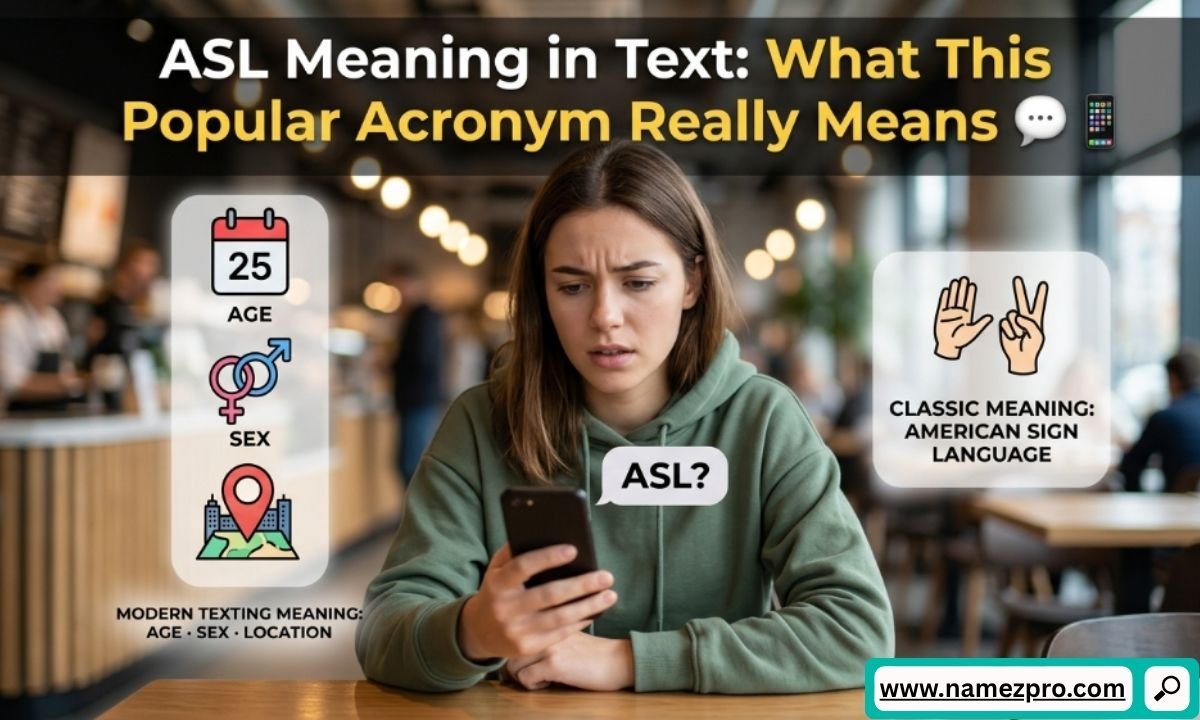
Before breaking down where each meaning comes from, here’s the short version of ASL meaning in text messages. It stands for three separate things, and none of them share much overlap. The first and oldest is Age, Sex, Location, a quick way early internet users asked strangers for basic info. The second is “as hell,” a modern intensifier. Teens and young adults drop it at the end of a sentence to add drama. The third is American Sign Language, the real, structured visual language used by the deaf and hard of hearing community.
The Three Meanings at a Glance
Here’s a quick reference so there’s no need to hunt through the rest of this guide for the basics.
| Example / Context | What It Means / How It Feels |
|---|---|
| “asl?” sent by a stranger in a chatroom or dating app | Age, Sex, Location; an icebreaker question, sometimes intrusive |
| “this line was so long asl” | As hell; an emphasis word, casual and playful |
| “She’s learning ASL for her job at the school” | American Sign Language; a formal, respectful reference |
| “ASL? f18 nyc” | Age, Sex, Location reply format, common on gaming and chat platforms |
| “I’m hungry asl right now” | As hell; exaggeration, not literal |
Why Context Decides the Meaning
Most people run into one meaning far more often than the other two. It depends on their age group and where they spend time online. Younger Gen Z users lean toward “as hell” in casual texting. People on older platforms or anonymous chat sites still run into the age, sex, location version. The third meaning rarely shows up unless someone specifically means the sign language itself.
Knowing all three definitions upfront makes the rest of this guide easier to follow. Context, not the letters themselves, decides which one applies each time. This distinction matters more than most people realize, especially for parents trying to read a teen’s texting habits.
Internet culture moves fast. Abbreviations like this one show how texting shortcuts evolve alongside new platforms. What started as a simple icebreaker in early instant messaging turned into a flexible piece of modern internet slang. Online vocabulary rarely stays fixed for long.
Read Also: SOL Meaning in Slang: How It’s Used in Text Messages & Online Chats
ASL as Age, Sex, Location: Where This One Started
This is the original meaning, and it’s older than most people using it today. Age, sex, location goes back to early chatrooms and instant messengers. Think AOL Instant Messenger, ICQ, and Yahoo Messenger in the late 1990s and early 2000s. Before profile pictures and bios existed the way they do now, asking “asl?” was the fastest way to learn who you were talking with. A 2001 Pew report on teen internet habits listed it as the most common question asked of newcomers entering chat rooms.
The pattern still shows up today in a slightly different form. Here’s how it plays out in a real exchange:
Stranger: hey Stranger: asl? You: 24/f/chicago Stranger: nice, I’m 26/m/dallas
Notice the shorthand reply format: age first, then gender, then city or state. This structure hasn’t changed much in twenty years, even though the platforms carrying it have. Dating apps, anonymous chat sites, and gaming lobbies still see this version pop up. It happens most often when two people don’t share a mutual friend or profile info already. Some older chatrooms pushed the format even further. Variants like ASLR (adding race) or A/S/L/M/H (adding music and hobbies) gathered more details in one message, though these longer versions faded out faster than the core three-letter original.
One thing worth knowing: this meaning of ASL meaning in text carries more risk than the “as hell” version, since it asks for real personal information. Parents and safety experts flag it often. Kids on gaming platforms or open chat rooms sometimes get asked their age and location by strangers with bad intentions. It isn’t always dangerous, though. A lot of the time it’s a harmless icebreaker between two adults on a dating app. The context around who’s asking, and where, matters more than the letters themselves.
ASL as “As Hell”: The Version Gen Z Uses for Emphasis
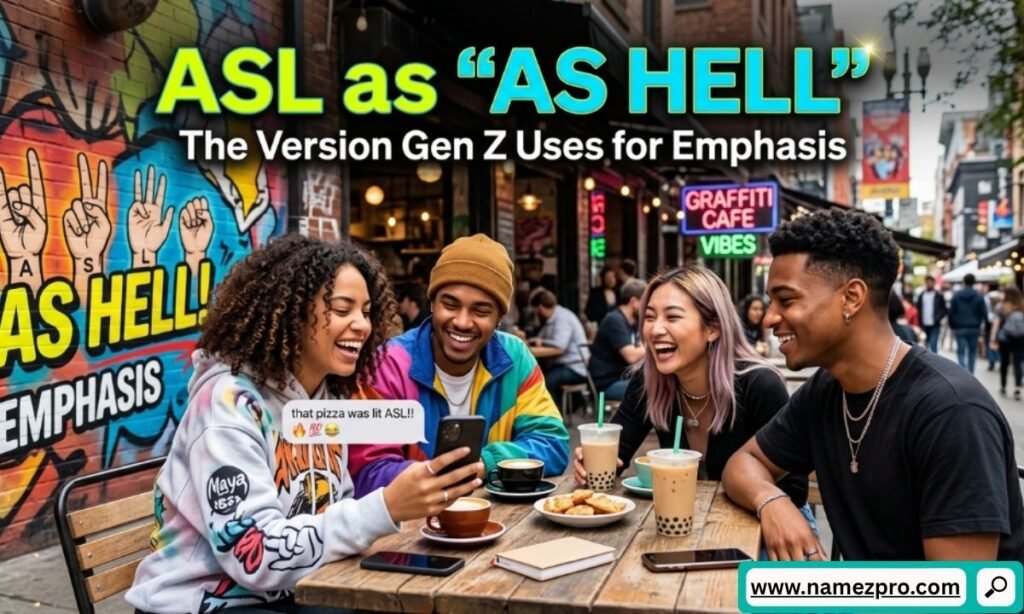
Here’s where ASL meaning in text takes a sharp turn from its original use. Somewhere along the way, teens and young adults started using “asl” as a stand-in for “as hell.” They slot it right after an adjective to push the emotion up a notch. It works almost like the word “super” or “extremely,” except it sounds more current and fits the fast pace of texting culture.
The pattern is consistent. It lands at the end of a sentence, right after a describing word, and it’s almost always written in lowercase. Two quick examples show how natural it sounds in everyday chats.
Friend 1: how was the concert Friend 2: it was loud asl but so worth it Friend 1: lol I bet
Friend 1: bro I’m tired asl today Friend 2: same, didn’t sleep at all
Notice neither example uses a question mark, and neither one asks for information. This is the biggest giveaway separating this meaning from the age, sex, location version. When “asl” shows up mid-sentence or at the end without a question mark, right after words like tired, funny, hot, or loud, it’s almost never asking anything. It’s adding punch to a statement instead.
This use case spreads fastest through TikTok, Snapchat, and group texts among younger users. Exaggeration and humor drive a lot of the tone there. Older internet users sometimes miss this meaning entirely, since it wasn’t around when they first learned the acronym. If a younger sibling or teenager texts “this homework is boring asl,” they aren’t asking three questions. They’re venting, with style, and picking up a texting shortcut now woven into casual conversation among their friend group.
Read Also: TBF Meaning in Text: What This Popular Acronym Really Means
American Sign Language vs. Internet Slang ASL
This meaning deserves its own space, since lumping it in with slang would undersell it. American Sign Language is a full, structured visual language with its own grammar. The deaf and hard of hearing community developed and uses it across the United States and parts of Canada. It isn’t a shorthand or an abbreviation of English. It’s a distinct language with its own history, culture, and rules, and it deserves the same respect given to any spoken language.
When someone types “she’s studying ASL” or “our school added an ASL class this year,” they’re referencing the real language, not the internet slang version. Context makes this distinction obvious most of the time. A sentence about school, interpreters, deaf culture, or accessibility signals the legitimate meaning right away. A sentence ending in an adjective, or a lone “asl?” question, points toward the slang versions instead.
Signals Pointing to the Real Language
A few signals help separate this meaning from the other two:
- Capital letters (ASL, not asl) show up more often in this context, though it isn’t a guaranteed rule
- Surrounding words about school, interpreters, deaf culture, or communication access point to the real language
- Formal or professional writing almost always means American Sign Language when the acronym appears
Showing Respect for the Language
Mixing this meaning up with the slang versions in a professional setting risks coming across as careless. It’s worth double-checking context before typing ASL in an email or a work message. The respectful move, when discussing the language itself, is spelling it out fully on first mention. Save the shorthand for casual writing where the audience already knows what’s meant. This one distinction alone clears up most of the confusion people run into with ASL meaning in text.
Accessibility awareness around American Sign Language has grown alongside video calls and virtual meetings. More schools, workplaces, and video platforms now add interpreters or ASL-friendly features for the deaf and hard of hearing community. Recognizing this real, structured language as separate from internet slang shows respect for the people who rely on it daily. It also keeps digital literacy sharp for anyone navigating both meanings across online communities.
Read Also: Opps Meaning in Slang: Your Complete Guide to This Trending Term
How to Tell Which ASL Meaning in Text Someone Means in 5 Seconds
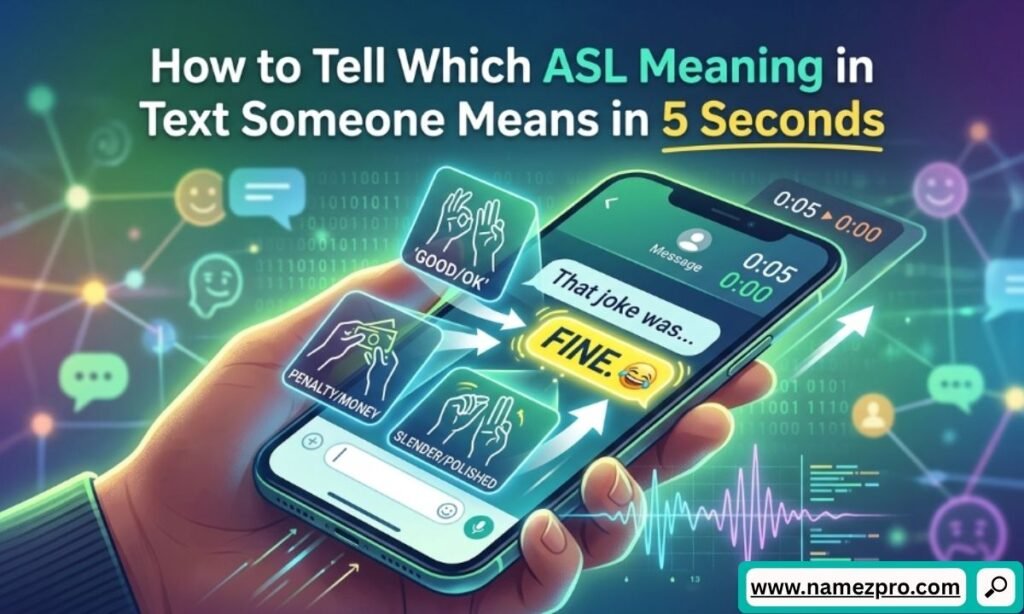
Most guides stop at listing the three definitions and leave the reader to guess. Here’s a faster way to read it: four signals working together instead of one clue alone.
Start with punctuation. A question mark almost always signals age, sex, location, since someone’s asking for info. No question mark usually points toward “as hell” or American Sign Language, depending on the rest of the sentence.
Next, check the position. If the letters sit at the end of a sentence right after a describing word (tired, hot, funny, boring), it’s the “as hell” version. If it opens the message on its own, it’s asking for age, sex, and location, often as a conversation starter with someone new.
Capitalization offers a weaker but useful clue. Lowercase “asl” leans toward the “as hell” meaning in casual texts. Capitalized ASL shows up more in formal writing about the actual language, though this isn’t a hard rule. Plenty of people ignore capitalization entirely while texting on a phone keyboard.
Finally, factor in the platform and the relationship between the two people talking. A stranger’s opening message on a dating app or in an anonymous chatroom leans toward age, sex, location. A close friend describing their day leans toward “as hell.” A school, workplace, or accessibility conversation points to the real language.
Common Mistake: assuming capital ASL always signals something formal. Plenty of people type in all lowercase or full caps out of habit, not meaning. Punctuation and sentence position tell you more than capitalization ever will.
Put these four signals together, and guessing turns into reading. This is the real shortcut nobody else walks readers through. It works whether the message shows up in a text thread, a comment section, or a direct message from someone brand new.
Building a Discord or gaming profile and need a name people won’t forget? Give our free Name Generator a spin for instant ideas.
Get instant name ideas no signup needed
How ASL Shows Up Differently on TikTok, Snapchat, Discord, and Dating Apps
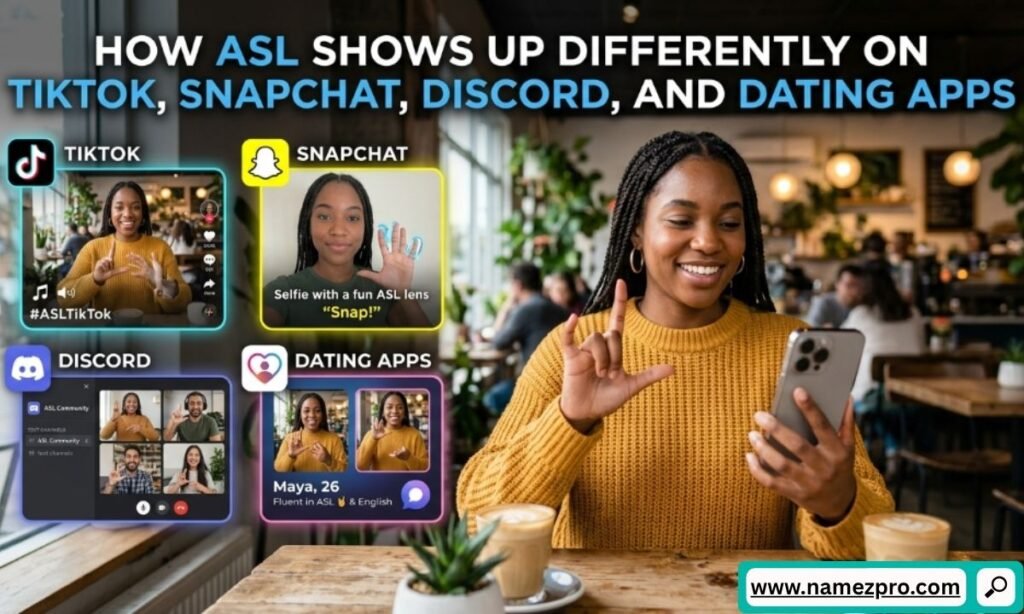
The platform someone’s texting on shapes which meaning of ASL meaning in text applies most of the time. A quick tour through the biggest apps shows the pattern clearly.
Where Each Meaning Shows Up Most
On TikTok and Instagram, comments and captions lean heavily toward “as hell.” Someone commenting “this fit is fire asl” isn’t asking anything. They’re reacting to what they saw.
TikTok comment: “the way she did this transition asl 😭” Reply: “fr it was wild”
Discord and gaming chats lean toward age, sex, location more often. This happens especially in servers built around meeting new people, or in voice-chat lobbies where players don’t know each other yet.
Player 1: anyone else on here from the east coast Player 2: asl? Player 1: 19/m/nyc, you?
Dating apps sit closest to the original meaning, since the entire point of the app is learning someone’s basic details fast. A message opening with “asl?” on a dating app rarely means anything but the classic version. The platform itself sets the context before a single word gets typed. Relationship status, timezone, and general location often follow right behind it in the same conversation.
WhatsApp tends to skew toward friend groups and family, so “as hell” shows up more than the icebreaker version, since most WhatsApp contacts already know each other well. Recognizing which platform carries the message before reading it saves a lot of guesswork. The app itself counts as one of the four signals from the framework above, right alongside punctuation, position, and capitalization.
International users add another layer, since WhatsApp dominates messaging outside the US while Snapchat and TikTok stay more popular domestically. Online friendships built through gaming chats often develop their own inside shorthand over time, and ASL frequently becomes part of the shared, casual language between close contacts rather than strangers.
Read Also: Alr Meaning in Text:What It Means, How to Use It, and Real Chat Examples
Why You’re Seeing “ASL?” Less Often on Roblox Now
Here’s a shift most guides on this topic miss completely. Roblox rolled out facial age verification for chat access. Once a user completes the check, they’re only able to chat with others in similar age groups, unless they become trusted connections with people they already know. The rollout began in select markets in December, then expanded worldwide the following month.
This matters directly for ASL meaning in text, since the entire reason someone asks “asl?” on a gaming platform is to learn a stranger’s age. Roblox’s filter system already blocks personal information and instructions on moving conversations off the platform. The newer age-verification layer takes this further. It limits who’s even able to chat with whom in the first place, based on estimated age.
For parents and younger users, this shift means fewer strangers asking directly for age, sex, and location on Roblox specifically. The platform now handles part of the filtering before a conversation even starts. It doesn’t eliminate the question entirely, though. Kids still see “asl?” pop up in other games and open chat platforms without this kind of age gating. Fortnite, open Discord servers, and smaller indie games don’t carry the same verification requirement. The classic version of ASL meaning in text still shows up regularly outside Roblox’s ecosystem.
Knowing which platforms have moved toward this kind of built-in protection, and which haven’t, helps set realistic expectations for anyone keeping an eye on a younger person’s online activity. Roblox’s move is one of the first concrete examples of a major gaming platform addressing the underlying reason “asl?” gets asked in the first place, rather than only warning users after the fact.
What to Say If Someone Asks Your ASL Meaning in Text
Knowing the definitions solves half the problem. The other half is deciding how to respond when a stranger asks directly. The right reply depends heavily on where the message came from, and how comfortable the situation feels.
On a dating app, where some info-sharing is expected, a general answer usually works fine without going into specifics:
Match: asl? You: 27/f, based in the Midwest! you?
In gaming chats or Discord servers with strangers, keeping things vague protects privacy. It still keeps the conversation friendly:
Stranger: asl? You: old enough to beat you at this game 😂
For kids and teens, the safest move is redirecting or ignoring the question entirely, rather than answering with real details:
Stranger: asl? Kid: no thanks, I’d rather not share
A few general guidelines apply across most platforms and messaging apps:
- Sharing a general region (Midwest, West Coast) instead of a specific city protects location privacy
- Rounding age up or down slightly, or skipping it, works fine in casual chats with strangers
- A short redirect (“why do you ask?”) often ends unwanted questioning without feeling rude
- Blocking or leaving the conversation is always a fair option if a question feels off
There’s no obligation to answer honestly, or at all, when a stranger asks for personal information online. Comfort and safety matter more than internet etiquette. A vague or deflecting answer counts as a normal, common response, not an awkward one.
Teaching kids and teens healthy chat etiquette early goes a long way toward safe online chatting overall. Reviewing a few sample replies together, or practicing a polite redirect, builds digital literacy skills. Those skills carry over into every messaging app and online community a young person joins later.
Read Also: SP Meaning in Text: What It Means in Chat, Social Media, and Texting
Frequently Asked Questions
Is ASL still used in 2026?
Yes, all three meanings stay active online. “As hell” dominates among younger users, while age, sex, location shows up more in gaming and dating contexts. Knowing the difference keeps casual conversation smooth across every platform.
Is it rude to ask someone their ASL?
It depends on the platform and relationship. On dating apps it’s expected. Asking a stranger in a kids’ game or open chat room often comes across as intrusive or unsafe, so reading the room first stays the safest approach.
Does capital ASL always mean American Sign Language?
No, capitalization is a weak signal at best. Sentence position, punctuation, and surrounding context matter more than whether the letters are capitalized. Relying on one clue alone leads to more mixed-up conversations than it solves.
Is ASL meaning in text used the same way on gaming platforms as on dating apps?
Not quite. Gaming chats and dating apps both lean toward the age, sex, location meaning. Dating apps expect the info, while gaming chats often treat it as a stranger-danger red flag instead.
Do I have to answer if someone asks my ASL?
No, sharing personal details online stays optional. A vague answer, a redirect, or ignoring the message entirely all count as reasonable responses. No messaging app requires disclosure beyond a person’s comfort level.
Wrapping It Into One Simple Takeaway
My cousin ended up replying to the stranger with a general answer and moved on with her day. This is exactly the point of everything covered here: ASL meaning in text isn’t one fixed thing. It shifts based on punctuation, sentence position, platform, and who’s asking. Once these four signals click into place, guessing turns into reading. Reading turns into knowing exactly how to respond, or whether to respond at all. Whether it lands in an inbox as an icebreaker, a burst of emphasis, or a reference to a real language, context always tells the story before the letters do. Reading those signals takes a little practice at first, but it turns into second nature fast, the same way any piece of texting culture eventually does.
Skip sharing your real name or location with strangers online and grab a fun alias instead. Our free Name Generator is ready whenever inspiration runs dry.
Get instant name ideas no signup needed